Category Archives: Daniele Cernilli

Lunch with Daniele Cernilli aka Doctor Wine

Last month, Marina Thompson and Daniele Cernilli invited us for lunch at their apartment in Rome. Both Marina and Daniele are very good cooks and of course there is the wine.Daniere

Daniele Cernilli, aka Doctor Wine, and his wife, Marina Thompson, have been friends for many years. We have tasted a lot of wine together both in the US and in Rome. Daniele is a true Roman. He is one of the most important men in Italian wine and has been a wine critic for many years. Daniele was one of the founders of Gambero Rosso and for 24 years was the editor of the Gambero Rosso Slow Food Wine Guide. Daniele was the creator of the now famous Tre Bicchieri, Three Glasses wine classification. Currently, he has his own web-magazine called “Doctor Wine” www.doctorwine.it. There are both English and Italian versions, and it covers both Italian and European wines. I read it regularly and recommend it to anyone interested in wine. He also has the best printed guide to Italian wines which is updated every year called The Essential Guide to Italian Wine 2020.

The Wines

Franciacorta Extra Brut Quinque Uberti in magnum made from 100% Chardonnay. This is a five vintage reserve wine produced with the Classic Method with a minimum of 80 months on the lees. This is an elegant Spumante with hints of chamomile, honey and ginger and a note of almonds.

Greco di Tufo “Vittorio” 2007 Di Meo made from 100% Greco di Tufo from vineyards in Montefusco at 750 meters and the vineyard was planted in 1998. The soil is clay, and limestone. The exposure is northeast and there are 3,500 plants per hectare. The training system is espalier with monolateral guyot pruning. The slightly overripe manual harvest takes place the second half of October. Fermentation is at a controlled temperature in stainless steel and 18 months in bottle before release. This is a wine with hints of apple and hazelnut, a note of citrus fruit, a touch of flint and good acidity and minerality. I visited the winery a few years ago as part of Campania Stories and liked the wine. The winery is located 15km east of Avellino between the villages of Salza Irpina and Parolise. Daniele knows I especially like the Di Meo Greco and I was very pleased he served it to us.

Daniele knows I especially like the Di Meo Greco and I was very pleased he served it to us.

With the wine we had three chesses burrata, mozzarella and straciatella. Daniele said that he had gone to thee different stores to get the best ones in Rome.

Monsanto Chianti Classico “Il Poggio” 2014 in magnum made from 95% Sangiovese and 5% Colorino and Canaiolo. The training system is guyot and spurred cordon. The wine is vinified in temperature controlled conical steel vats. Delestage and pumping over for about 20 to 22 days. The wine is aged in 500 liter oak barrels, partly new and partly second hand for 18 to 20 months. The wine remains in the bottle for 2 years before release. The wine has hints of blackberries and blueberries with a hint of violets. Monsanto is located in the western-central area of the Chianti Classico region in the municipality of Barberino Tavarnelle. I have a long history with Monsanto going back over 35 years and the 1977 vintage of Il Poggio.

To go with the wine, Daniele had prepared a delicious stew of chickpeas and Tuscan kale,

which Marina served with a delicate polpettone or meatloaf.

Vinsanto del Chianti Classico 2008 in half bottle made from Malvasia and Sagiovese from various vineyards within the property. Fontodi

There are 3,500 to 6,000 vines per hectare and the training system is guyot. The grapes after the harvest are naturally dried for 5 months. After the pressing the must is racked into chestnut and oak barrels of 50 and 110 liters where aging takes place for at least 6 years. There are only 3,000 bottles produced. Fontodi is located in Panzano in Chianti. This is an excellent dessert wine with hints of hazelnut, dried apricot, honey and a touch of caramel.

To go with the wine, there was a magnificent panettone, one of the best I have ever had.

Finally there were glasses of Grappa UE “Uvarossa” Nonino made from Schioppettino, Refosco and Fragolino. It was a great way to end a wonderful afternoon.


Leave a comment

Filed under Chianti Classico, Daniele Cernilli, Di Meo winery, Grappa, Greco di Tufo, Uberti Quinque, Vin Santo

Tom Maresca on “The Essential Guide to Italian Wine”

Tom Maresca is a wine writer for whom I have the utmost respect.  In his blog, Tom’s Wine Line, he wrote this excellent review of Daniele Cernilli’s Book, The Essential Guide to Italian Wine, that expresses my thoughts exactly.

The Essential Guide to Italian Wine? Very Possibly

With its recently released 2019 edition, its fifth, Daniele Cernilli’s Essential Guide to Italian Wine has come of age. Published now in Italian, English, and German editions, well over 600 pages long (and well indexed), and reviewing 1,134 estates and 2,809 wines, the Essential Guide certainly covers the Italian wines that a North American consumer needs to know about – in fact, many more than are currently available in this hemisphere. But one can always hope.

Cernilli’s Guide is organized in the classic way, region by region, the producers listed alphabetically and awarded zero, one, two, or three stars based on their total production and track record; and selected individual wines scored on the now standard, to me infamous 100-point scale and their price range indicated – all useful information, handily presented.

For those who may not recognize his name, Daniele Cernilli is a central figure in the Italian wine world, a critic of major importance and great knowledge. He was one of the founders of Gambero Rosso and was deeply involved not only in its editing but also in the whole process of its evaluations, which by way of their one-, two-, and three-bicchieriawards became the most prestigious of all of Italy’s ranking systems.

When he and Gambero Rosso parted ways several years back, Cernilli reinvented himself as Doctor Wine and began creating his Essential Guide.

I shudder to think of the amount of work it took to bring it to its present condition, especially since Cernilli and his co-workers do not solicit samples or accept advertising from individual wineries. Instead they visit wineries, participate in regional and consorzio tastings, and even buy wines from the same sort of shops Italian consumers patronize. That last practice will send chills up the spines of wine magazine publishers on several continents.

Full disclosure: I’ve known Daniele Cernilli for at least two decades. Even fuller disclosure: We don’t always agree – in fact, we have sometimes been on opposite sides of a wine, a winery, or a wine style. But I don’t know anyone who knows the wines of Italy – all of Italy – in greater depth than he does, so I always take his evaluations seriously.

Here’s a representative example of both his knowledge and our occasional disagreements: The 2019 Guide’s White Wine of the Year award is shared by two wines:

  • Fiano di Avellino Stilèma 2015, Mastroberardino, Campania
  • Solo MM 15 2015, Vodopivec, Friuli Venezia Giulia.

Now, Fiano di Avellino is a justly esteemed grape variety, and Mastroberardino has long been one of its finest producers. Additionally, I happen to have tasted the Stilèma, and I agree totally with Cernilli’s judgment of its greatness. Here’s what he says of it in his entry:

Typical notes of flint, then fresh almond, wild herbs, elegant and extremely clear aromas. Agile and savory taste dominated by a magical freshness that gives elegance and drinkability to the wine. Smooth and long persistence. Great wine.

Stilèma is the first fruit of an experiment initiated by the late Antonio Mastroberardino to use materials derived from old and especially from pre-phylloxera vineyards (of which there are several in the Fiano zone) to back-engineer Fiano di Avellino to the sort of prime vines and field and cellar techniques that yielded the greatest wines of what we can call the “pre-industrial years” of Italian winemaking. As Antonio’s son Piero puts it:

We intend to evoke the style of vinification of the native vines of Irpinia (Greco, Fiano and Aglianico) as it took place between the end of the 50s and the beginning of the 70s of the twentieth century for Taurasi, and between the years 70 and 80 for the two noblest whites of Irpinia. It is, then, the style (or the Stilèma) of a family that interprets, over generations, the natural heritage of its territory, which makes it specific, as predestined to play a role in that land.

Noble purposes, and already producing noble results.

But what of Cernilli’s other choice for White Wine of the Year? Solo MM 15 2015 is a wine and Vodopivec a maker unknown to me. Cernilli describes winemaker Paolo Vodopivec as a meticulous and devoted craftsman, committed to the very localized traditions of the Friulian Carso and to experimentation with vinifying wines in amphorae. Of this wine, he says:

100% Vitovska grapes. Fermented in amphora for 6 months then aged in large casks. Unfiltered. Bright straw yellow color. Austere nose offering notes of sea breeze and aromatic herbs. The palate is expressive, briny and citrusy; powerful and fresh, vibrant, and with a unique personality. Wonderful wine.

That’s certainly detailed enough to prompt me to look for a bottle next time I’m in Italy, since I infer that it comes to this hemisphere only occasionally, in small quantities and at fairly high prices. A little research told me that Vitovska grapes are very localized within Friuli, had almost disappeared until rescued a decade or so ago by some devoted winemakers, and are now enjoying a small vogue in Italy. Worth a try? For sure. One of the year’s great white wines? Given my very uneven experiences with amphora-aged wines, I’d say that’s far less certain.

But the surprising (to me at least) award pairing gives evidence, if any is needed, of just how unconventional and eclectic Cernilli’s palate is, how plugged in to the Italian wine scene he is, and how informative and useful – indeed, what a simply interesting read – his Essential Guide is. You can count on one finger the number of annual wine guides I enjoy picking up and just browsing in: This is it.

HAPPY AND A HEALTH NEW YEAR!

1 Comment

Filed under Daniele Cernilli, Daniele Cernilli Doctor Wine, Tom Maresca

Drinking and Eating with Daniele Cernilli (Doctor Wine)

Michele and I spent a few days in Rome before going on a grappa press tour with “Hello Grappa” along with our friend, wine writer and grappa lover, Tom Maresca.

I wanted to go to my favorite restaurant in Rome — Checchino dal 1887 — and Tom agreed. We invited Daniele Cernilli (Checchino is his favorite restaurant) and his wife Marina Thompson.

Daniele Cernilli

Daniele Cernilli, aka Doctor Wine, and Marina have been friends for many years. We have tasted a lot of wine together both here and in Rome. Daniele is true Roman, a Romano de Roma as the expression goes. He is one of the most important men in Italian wine and has been a wine critic for many years. He was one of the founders of Gambero Rosso and for 24 years was the editor of Gambero Rosso-Slow Food Wine Guide. Daniele was the inventor of the now famous “Three Glasses” classification for Italian wines. Currently, he has is own web-magazine called “Doctor Wine” www.doctorwine.it. There are two versions, one English and the other Italian, and it covers both Italian and European wines. I read it regularly.

Checchino is a family run restaurant with Francesco Mariani on the floor and his brother Elio in the kitchen.  When we arrived at the restaurant, Francesco welcomed us as always.

Checchino has one of the best wine lists in Rome and Francesco is always ready to talk about his wines.  After we selected the wines Daniele presented Tom and I with copies of his Essential Guide to Italian Wines 2019.

THE WINES

Le Vignole–Bianco del Lazio 2012 IGT Colle Picchioni made from Malvasia, Sauvignon and Trebbiano. Maceration is on the skins and the wine is aged in French barriques. The winery is located in Marino a short distance from Rome.  The wine remains  on the lees for some time and has  a slightly golden color. Tom said it reminded him of a Rhone white wine and I agreed.

Stilema 2015 Mastroberadino made from 100% Fiano di Avellino. 10% of the wine is fermented in barriques. This is Daniele’s description of the wine in his book: “Typical notes of flint, then fresh almonds, wild herbs, elegant and extremely clear aromas. Agile and savory taste dominated by a magical freshness that gives elegance and drinkability to the wine. Smooth and long persistence. Great Wine.”

Colle Piccioni Rosso 1982, Paola di Mauro, made from Cabernet Sauvignon, Cabernet Franc and Merlot. The wine consultant at the time was the legendary Giorgio Grai. The wine consultant today is Riccardo Cotarella. The wine wAS aged in large oak barrels. I have visited the winery twice and both times drank the 1985 vintage. The 1982 had hints of leather and cherry with a very long finish and great aftertaste. It was as good as the 1983 I had the last time we were here.

Barolo 2010 DOCG Pio Cesare made from 100% Nebbiolo.  The grapes are from family owned vineyards in Serralunga, Grinzane Cavour, La Mora and Barolo. Vinification is in stainless steel and skin contact and maceration is between 25 to 30 days. The wine spends 3 years in large oak barrels. Daniele said I would like the wine because it was very traditional in style and he was right.

After lunch, Daniele invited Tom and I to meet him at his favorite wine bar Il Goccetto that night to taste some wine.  Here is what we drank:

Franciacorta Brut NV Mosnel Metodo Classico made from 60% Chardonnay, 30% Pinot Bianco and 10% Pinot Noir.  From the following vintages:  70% 2012, 20% 2011 and 10% 2010.   30% was fermented in wood and the wine was on the lees for 40 months. Dosage, Brut 3.5 g/l and disgorged in Jul 2016. The wine had nice fruit with hints of white flower and peach.

Vorberg Pinot Bianco Riserva Alto Adige DOC Terlan made from 100% Pinot Bianco from vineyards at 500 to 900 meters, with a south, southwest exposure. The soil is sandy porphyric gravel. The grapes are hand harvested and a gentle pressing of the whole cluster and clarification of the must by natural sedimentation takes place. Slow fermentation at a controlled temperature is in big oak barrels of 30HL. Malolactic fermentation follows and the wine ages on the lees in traditional wooden barrels for 12 months. The wine has hints of wild flowers, pear and honey with a touch of almonds and hazelnuts.

It is always interesting to taste and drink wine with Daniele because he comes up with wines and producers which I have not had before. The 3 whites and the Brut were all new for me.

2 Comments

Filed under Barolo, Checchino dal 1887, Colle Picchioni, Daniele Cernilli, Daniele Cernilli Doctor Wine, Franciacorta Brut, Mastroberardino, Mosnel Franciacorta, Pinot Bianco, Pio Cesare, Tetlan Vorberg Pinot Bianco Riserva, Uncategorized

Daniele Cernilli on Genetic Editing

| Published on DoctorWine N°224
Trend Topic: Genetic editing
by Daniele Cernilli 28-08-2017
Parola d’ordine: cisgenetica editoriale doctowine daniele cernilli
Studies on genetic editing made by professor Attilio Scienza and by the Edmund Mach institute in San MIchele all’Adige oper the path to the creation of vines resistent to diseases. Will this be the future?

Recently, I have been often citing Attilio Scienza and his observations but I do so because I believe they are illuminating for the future of winemaking. For those who do not know who he is, he held the chair for viticulture at the University of Milan for years, was the head of the Istituto Mach di San Michele all’Adige and is the author of many books on both scientific and other subjects. His latest research, carried out at San Michele, dealt with gene or genetic editing, scientifically known also known as cisgenesis, and removing certain genes from a vine DNA in order to create grapes that are resistant to botrytis, above all. If we consider that anti-botrytis treatments represent the majority of those carried out in the vineyard, using these grapes would eliminate a significant percentage of polluting substances. But would this make organic and biodynamic methods useless?

Scienza doesn’t think to. “The birth of agriculture was an act of genetics. Already in the Neolithic Age, man was selecting plants and animals to raise to serve as food. The common trait in innovation is fear. Biodynamic and organic farming seek to preserve natural resources and thus are a response to a fear of losing them but we need to go beyond this. Organic farming is not convincing because it is a dead-end street. We cannot return to the past because this would mean denying the future. It would be like trying to preserve the Ship of Theseus”. Is genetic editing a back door to creating genetically modified organisms (GMO)? Not at all because GMOs are created by inserting foreign genes into the DNA to be modified whereas as genetic editing removes genes from the host. If it were possible to eliminate the gene that causes cancer from a person’s DNA, wouldn’t everyone be in favor of this?

While this may be an extreme and, at present, a hypothetical example it serves to prove a point. In regard to wine, if genetic editing can be used in a way that does affect quality, then it would be possible to eliminate enormous amounts of harmful substances in the vineyard. I am convinced that genetic editing in winegrowing will be the topic of the day in the very near future and it will be interesting to see what positions will be taken by groups like Slow Food or the farmers’ unions Coldiretti and Confagricoltura, not to mention the ministry of agriculture and the European Union. In the wine sector, there will be a confrontation between science and ideology, between believers and deniers, between the future and a nostalgia for a past that, between climate change and limitations on the use of polluting substances, can only remain a distant memory.

Leave a comment

Filed under Daniele Cernilli, Daniele Cernilli Doctor Wine, Uncategorized

Daniele Cernilli on Checchino dal 1887 and Monfortino-a Heated Argument

I reprint a number of articles by Daniele Cernilli aka Doctor Wine because I am in agreement with his point of view on the state of Italian wine and restaurants in Italy.

Checchino dal 1887 is for me the best restaurant in Rome for food and wine.

Signed DW

Signed DW | Published on DoctorWine N°219

Checchino and Monfortino

by Daniele Cernilli 17-07-2017

Checchino e il Monfortino

A certain schizophrenia seems to be pervading current wine and food criticism which, on the one hand, praises narcissistic and out of touch chefs and, on the other, sings the praises of “authentic” wine tradition.

Speaking recently with a journalist who I will not name, a veteran wine and food critic, I heard some statements that were contradictory to say the least. Our conversation began with a discussion on the attitude food critics had towards certain restaurants specialized in traditional cuisine.

On my part, I complained that a guide I collaborated with had dropped the Roman restaurant Checchino dal 1887, a temple of Roman cuisine in the Testaccio neighborhood where coda all vaccinara (ox-tail strew) was invented. At the same time, the guide gave high ratings to trendy restaurants in that same neighborhood that not only lacked any history but also, in my opinion, any real gastronomic merit. The great traditional dishes were overlooked in favor of a stateless and ignorant cuisine, the product of improvised fusions. Needless to say, our discussion became quite heated and I heard myself being defined as defender of “stuffy” traditional cuisine and basically a dinosaur among food critics.

I struggled to bite my tongue. Immediately after, however, I heard the same person give a sermon in favor of the most classic Barolo wines, Monfortino first among them, bitterly criticizing all those who dared veer away from the most authentic traditions by using new-wood barrels and experimenting with methods that, in his view, prejudiced the true typicity of those wines. This was crazy, I said to myself, why are the recipes from Checchino “stuffy” while by the same measure Monfortino is the best there is? Make no mistake, Monfortino is truly an immense wine and while I agreed with him on this, some consistency or coherence was warranted when defining what is authentically traditional. This because it also has to do with cultural importance, as well as organoleptic considerations, and I would put into the same boat the vaccinara from Checchino, the shanks of Josko Sirk and the Subida from Cormons as well as the “schlutzkrapfen” of Patesheider hof on the Ritten of Bolzano, just to name a few examples.

A certain schizophrenia seems to be pervading current wine and food criticism which, on the one hand, praises narcissistic and out of touch chefs and, on the other, sings the praises of “authentic” wine tradition.

If you have has similar experiences, let me know.

Th

Signed DW

Signed DW | Published on DoctorWine N°219

Checchino and Monfortino

by Daniele Cernilli 17-07-2017

Checchino e il Monfortino

A certain schizophrenia seems to be pervading current wine and food criticism which, on the one hand, praises narcissistic and out of touch chefs and, on the other, sings the praises of “authentic” wine tradition.

Speaking recently with a journalist who I will not name, a veteran wine and food critic, I heard some statements that were contradictory to say the least. Our conversation began with a discussion on the attitude food critics had towards certain restaurants specialized in traditional cuisine.

On my part, I complained that a guide I collaborated with had dropped the Roman restaurant Checchino dal 1887, a temple of Roman cuisine in the Testaccio neighborhood where coda all vaccinara (ox-tail strew) was invented. At the same time, the guide gave high ratings to trendy restaurants in that same neighborhood that not only lacked any history but also, in my opinion, any real gastronomic merit. The great traditional dishes were overlooked in favor of a stateless and ignorant cuisine, the product of improvised fusions. Needless to say, our discussion became quite heated and I heard myself being defined as defender of “stuffy” traditional cuisine and basically a dinosaur among food critics.

I struggled to bite my tongue. Immediately after, however, I heard the same person give a sermon in favor of the most classic Barolo wines, Monfortino first among them, bitterly criticizing all those who dared veer away from the most authentic traditions by using new-wood barrels and experimenting with methods that, in his view, prejudiced the true typicity of those wines. This was crazy, I said to myself, why are the recipes from Checchino “stuffy” while by the same measure Monfortino is the best there is? Make no mistake, Monfortino is truly an immense wine and while I agreed with him on this, some consistency or coherence was warranted when defining what is authentically traditional. This because it also has to do with cultural importance, as well as organoleptic considerations, and I would put into the same boat the vaccinara from Checchino, the shanks of Josko Sirk and the Subida from Cormons as well as the “schlutzkrapfen” of Patesheider hof on the Ritten of Bolzano, just to name a few examples.

A certain schizophrenia seems to be pervading current wine and food criticism which, on the one hand, praises narcissistic and out of touch chefs and, on the other, sings the praises of “authentic” wine tradition.

If you have has similar experiences, let me know.

2 Comments

Filed under Checchino dal 1887, Daniele Cernilli, Uncategorized

Daniele Cernilli on “The Price of Wine”

Signed DW

Signed DW | Published on DoctorWine N°216

The price of wine

by Daniele Cernilli 26-06-2017

Il prezzo del vino

There has recently been quite a stir in the wine-web community over the news that the Swedish state alcohol monopoly had launched a tender for Barbera d’Asti wine age in small barrels at a maximum price of 2.30 euros per bottle. When you consider that the average price per bottle for exported Italian wine is three euros and that exported bulk wine sells for 0.68 euros, the offer does not seem to be too bad. However, what is disturbing is that the wine in question has a top DOCG classification, which stands for controlled origin and guaranteed quality, which makes the offer is very degrading. Undoubtedly, there will producer cooperatives and industrial bottlers who will jump at the offer given that they, as opposed to small producers, have the quantity to sell at a lower per-bottle profit margin. The fact that this is a problem is not easy to understand for those not sufficiently acquainted with the wine business. It is not easy because while the DOC (controlled origin) and DOCG classifications undoubtedly have their merits, they are not enough to distinguish the diverse origins of wines and different production costs. Thus there is a real risk that Gresham’s Law, “bad money drive out good”, may come into play and mediocre wine at a low price will win over better wine, the craft wines and those made with particular care. The reality is that if the consumer has three euros to spend on wine they will buy a wine at that price. There are some fairly discreet Italian wines that cost relatively little, including the much vilified Tavernello and Ronco which are not flawed and cost around a euro. But these wines are neither DOC nor DOCG classified and in the end you get what you pay for. The basic problem lies with the system of classification itself, the way they are determined and the way the public perceives them. The DOC classification, for example, is important in the collective imagination of those with a superficial knowledge of the wine but it only guarantees origin and not quality, something which the DOCG classification does. By law, in order to receive a DOCG classification a wine must have a “particular merit”. And common sense tells us that this “particular merit” must have to do with high organoleptic qualities which cannot be consistent with low prices. Although there are surly those who cheat this system, as evidenced by the investigations by health inspectors, they are the exception and not the rule and they are not the real problem. What needs to be clarified is exactly what the classifications are supposed to represent. Whether they are there just for show or as a guarantee of quality for the consumer and for the livelihood of many winemakers. This is the crux of the problem but, unfortunately, Italian politicians and many speculators avoid tackling it and prefer to create a smoke screen and spew terms like “excellence”. This means that consumers are left to fend for themselves either by word of mouth or consulting the few sector publications left in Italy.

Leave a comment

Filed under Daniele Cernilli, Daniele Cernilli Doctor Wine, Uncategorized

From Your Agent at Vinitaly- Daniele Cernilli

I did not attend Vinitaly this year so here is the next best thing a report by Daniele Cernilli aka Doctor Wine

Signed DW | Published on DoctorWine N°206

From your agent at Vinitaly

by Daniele Cernilli 17-04-2017

Daniele Cernilli seminari DoctorWine a Vinitaly 2017

Vinitaly has come and gone and it was the best is years. Despite all the problems afflicting the Italian wine sector, the atmosphere at the trade fair was really good, public attendance was hight and all the producers I spoke to were satisfied. Good thing. At our Doctor Wine stand we organized 11 seminars all which were packed full of interested and competent people. We received a lot of compliments and the only criticisms came from those who were on the waiting list and failed to get a place. I apologize for this but the space available was limited, only 28 seats while the demand was at times for as many as 50. We’ll see what we can do to improve this next year, I promise. As for the wines we tasted I must say there were some really good ones. I can start by saying that vintage 2013 for Barolo is not that far behind the legendary 2010. The more simple 2015 and 2015 reds were also formidable as were most of the whites. From Tuscany there were a lot of 2014 vintages and some of them, especially the Sassicaia, went far beyond expectations. Aside from these let me make a few suggestions. I’ll start with the Aglianico del Vulture Titolo 2015 from Elena Fucci which is delicious, perhaps the best ever. Then there is the remarkable Colli di Luni Vermentino Etichetta Nera 2016 of Lunae Bosoni which is fragrant and distinct more than ever. The fruit in Elio Altare’s Dolcetto d’Alba 2016 is as a defined and clear as only a great winemaker like himself can achieve. Surprising. The Barbera d’Asti Superiore L’Alfiera 2015, from Marchesi Alfieri, is very young yet more promising than usual. Tasting the Taurasi 2012 from the Fiorentino family, on the other hand, was a true eureka moment and a high-class debut. Alberto Longo’s Falanghina Le Fossette 2016 is from northern Puglia and unites fragrance and a precise bouquet with a saline and most pleasing flavor. Vermentino di Sardegna Camminera 2016 Audarya is a wine for those seeking a delicious white without maxing out their credit card. In the same category is the Soave Superiore Monte di Fice 2016 from the I Stefanini winery and I intend to acquire some for my own cellar and can already image drinking it this summer with a nice fish fry. These wines are neither rare nor too expensive and they impressed me for being well-made, representative of where they are from and, again, not excessively expensive. Last but not least I add a great red that is often overlooked because it is the estate’s second wine after its showcase Sassicaia. Guidalberto 2015 is a great vintage and perhaps the best since the legendary 2004 which was fantastic. While this may cost more than the others, it is truly well worth it.

Leave a comment

Filed under Daniele Cernilli, Daniele Cernilli Doctor Wine

Excellent Article in the Washington Post on Wine Critic Daniele Cernilli

Italy’s go-to critic confirms why America’s embracing his country’s vino

Columnist, Food March 11  The Washington Post

Searching for value, variety and excitement in wine? Look to Italy — or so says Daniele Cernilli.

Cernilli is the author of “The Ultimate Guide to Italian Wine 2017,” and a longtime champion of the wines of his native country. The Roman was one of the founding editors of Gambero Rosso, the leading Italian food and wine magazine that grew out of the Slow Food movement in the 1980s. Wine lovers around the world know Gambero Rosso’s “tre bicchieri,” or three glasses, as the highest rating an Italian wine can receive (at least in Italy).

“Italian wines are the new wave for high-quality wines for Americans,” because there are many with high quality for the price, Cernilli told me during a recent industry and consumer tasting at the Mayflower Hotel sponsored by the Wine Scholars Guild. The tasting included about 50 wines that were top scorers in his new guide.

“Quality is higher than Spain, but in price we are lower than France,” Cernilli said, explaining Italy’s appeal to value-conscious consumers.

Those consumers should look for wines from Campania, he said. “The wines there are improving in a tremendous way. It’s the Tuscany of the south.” He praised Campania for its local grape varieties such as fiano and greco di tufo, as well as wines made with international varieties.

At 62, Cernilli looks every bit the rumpled oenophile, with a wine-softened smile lifting his double chin, and a paunch coaxing out his shirttail. (Believe me, I know the look.) He is congenial, but he bristles at the mention of Gambero Rosso, which he left in 2011 to create his own website, DoctorWine.it.

When a winery representative offered a taste of a Chianti Classico during the event, saying, “It got tre bicchieri,” Cernilli waved it off and pointed to another wine.

“I created tre bicchieri,” he said. “I know what it has become. It’s all politics.

“I am too romantic to be in Gambero Rosso today,” he continued. “It is more modern and commercial. They gave 450 tre bicchieri last year. That’s too many high awards. They also do more than 50 events worldwide each year. In my day, we did three.

“I want to be a publisher, not a promoter,” he said.

So in addition to his website, Cernilli has self-published his third annual guide in Italian (and second translated in English) as a counterpart to Gambero Rosso’s annual Guide to Italian Wines, which he edited for more than two decades. In that respect, he is not unlike other prominent writers, such as Wine Spectator’s James Suckling or Wine Advocate’s Antonio Galloni, who have tried to leverage their own reputations independent of the publications that made them famous. It is available for $20 at Eataly in New York and will soon be on Amazon. (Amazon chief executive Jeffery P. Bezos is the owner of The Washington Post.)

This might be a good time for this book. Americans are buying more Italian wine than ever, according to the business news website Il Sole 24 Ore. Italian wine exports to the U.S. market last year topped 1.8 billion euros (about $1.9 billion), up 6 percent over 2015. That was a volume increase of 4 percent.

Prosecco, the inexpensive and charming — if rarely compelling — sparkling wine, led the charge, with 2016 sales up 28.5 percent over the previous year.

With more than 500 grape varieties, Italy offers a lifetime of wine adventure and exploration. Cernilli’s book guides us, region by region, through the top producers as rated by him and his contributors. Wineries are evaluated from 0 to 3 stars, with their top wines scored on a 100-point scale. Wines that score 95 or higher receive an additional stamp of approval: Cernilli’s visage, dubbed a “DoctorWine Face” — his personal guarantee of the wine’s quality. Inexpensive wines that show extraordinary value are denoted by a thumbs-up symbol, the universal social media positive review. Cernilli and his team also named their best red and white wines of the year, as well as winery and winemaker of the year.

Cernilli may have written the “ultimate” guide to Italian wine, but it isn’t an exhaustive one. The book includes nearly 1,000 wineries and about 2,500 wines. Some wineries familiar to U.S. wine lovers are conspicuous by their absence, such as Alois Lageder in Alto Adige, the cult winery Radikon in Friuli and Tenuta delle Terre Nere on Sicily’s Mount Etna.

“We choose wineries by the quality of their wines year by year,” Cernilli told me. When wineries don’t perform as expected, he leaves them out rather than writing a bad review, “out of respect to their history and international image.”

“The Ultimate Guide to Italian Wine 2017” is a valuable reference, engagingly written in an Italian accent. Let Italy’s foremost wine critic introduce you to the exciting variety Italy has to offer.

Leave a comment

Filed under Daniele Cernilli, Uncategorized

Notes on Vinitaly 2015

IMG_7546Vinitaly, the annual wine fair in Verona, Italy, is much bigger now than the last time I was there eight years ago. There are 12 very large pavilions and a number of smaller ones. The fair used to last 5 days, but now it is 4.IMG_7547

At least one wine writer, Alfonso Cevola, was disappointed at the state of affairs at Vinitaly and wrote what he called a “Dear John Letter.” He made some very good points on why he may not return to the fair–here is the link to the blog.https://charlesscicolone.life/2015/03/28/alfonso-cevola-a-dear-john-letter-to-veronafiere/ While I agree with Alfonso on many points, there is another side of the fair, that of visiting and tasting wine with old friends and making new ones, that I think is the best part.IMG_7540

Sunday was the first day and the most crowded. Our first visit was with Barbara De Rahm, a negotiant I have known for many years. There was a time when I was the Wine Director at I Trulli that I would sit all day at Barbara’s stand tasting wine.IMG_7542

The next stop was a visit and tasting with Valter Fissore and his wife Nadia Cogno of the Elvio Cogno winery. I have known Valter and Nadia for a number of years and like his style of wine. Travis and Nicole, the owners of Turtledove Wines and my travelling companions, like these wines and have a large selection in their store.IMG_7159

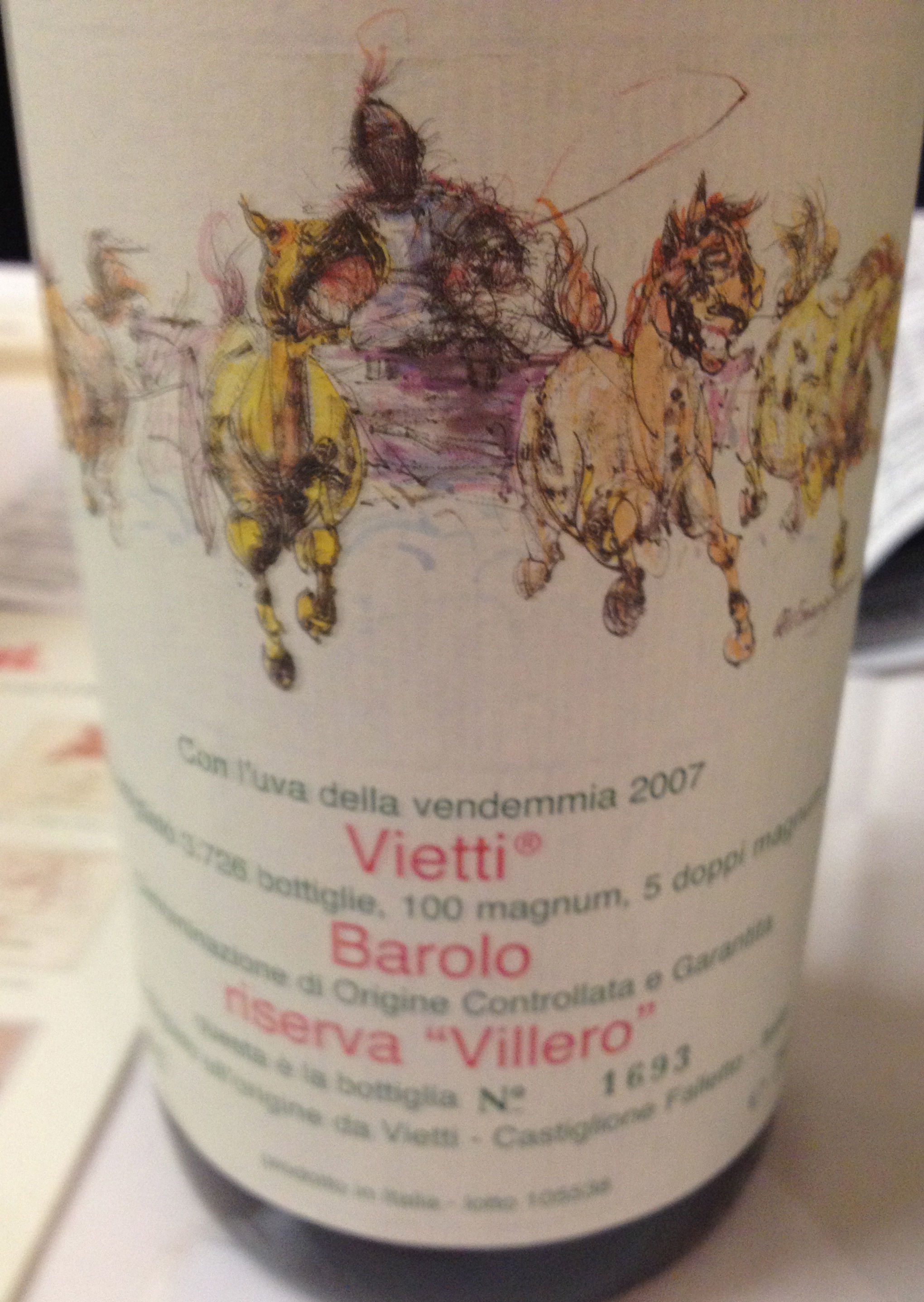
Next we stopped by to see Luca Currado of the Vietti winery who I have know for over 30 years. His 2007 Barolo Villero was the 2015 Gambero Rosso red wine of the year.IMG_7568

Next was a visit to my favorite maker of Chianti Rufina Grato Grati. We tasted the Chianti and then tasted a wine I have never had before, a Canaiolo Bianco di Toscana. It was very good.IMG_7566

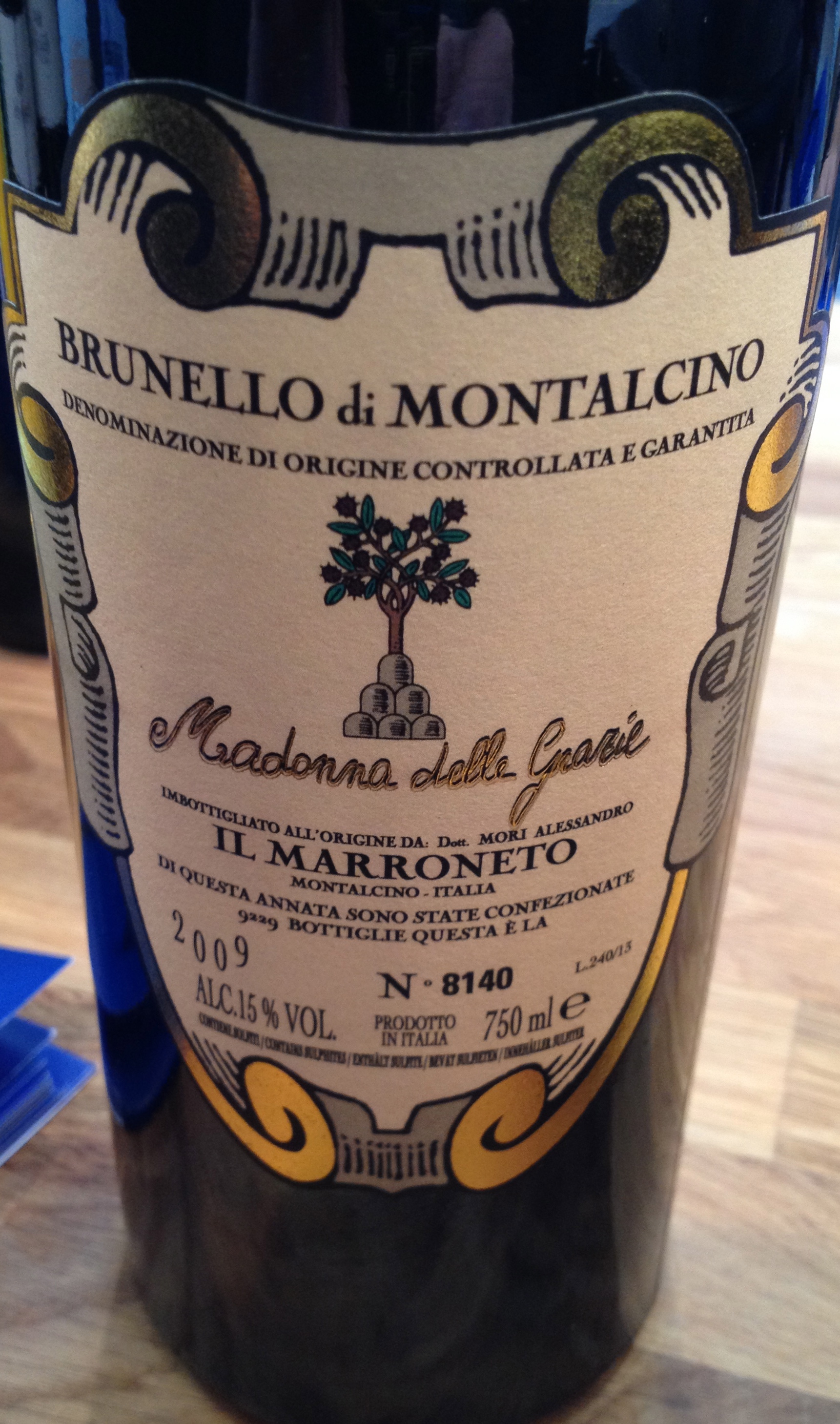
Riccardo Gabriele does PR for Italian wines and one of his clients is Il Marroneto, producers of a traditional Brunello di Montalcino, Madonna della Grazie, which I believe is one of the best Brunellos made.IMG_7558

A Facebook friend, Steven Giles, suggested I visit Donatella Giannotti of the Cascina Montagnola winery. We tasted the Colli Tortonese Cortese and two wines made from the Timorasso grape, Dethma and the Morasso. They are looking for an importer in NYC and I highly recommend the wines.IMG_7641

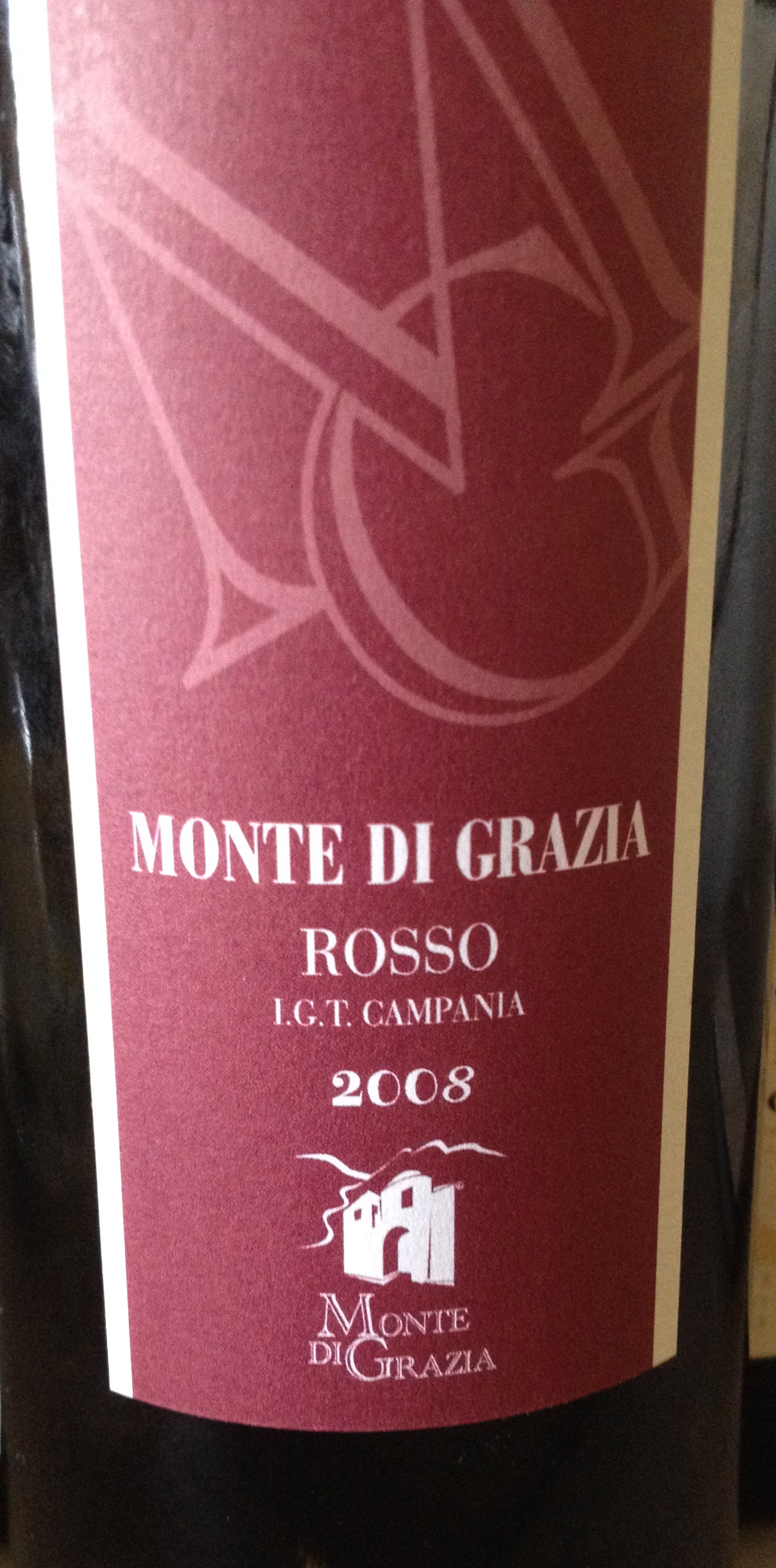
Then we visited Dr. Alfonso and Anna Arpino of the Ag Az Monte Grazia Biological winery in Tremonti high above the Amalfi Coast. They make three wines–a white, a rose and a red, and are among my favorite wines.

Next we visited the Machesi Bartolini Baldelli of Fattoria di Bangolo in Tuscany. I have know the Marchese for a number of years and when Michele and I were at the fair or in Florence we would go out to dinner with him and his wife. His wife is from Scarsdale, NY.IMG_7541

We also stopped by to visit marketing specialist Marina Thompson and her husband, wine authority Daniele Cernilli, known as Doctor Wine.IMG_7572

Our last visit was to Clavesana, makers of Dolcetto in Dogliani. We talked with Anna Bracco and Mario Felice Schwenn from the winery. Siamo Dolcetto meaning “We are Dolcetto” is the slogan of this large co-op. They said that Dolcetto is no loner required on the label, all it has to say is Dogliani, where the wine comes from, to know it is Dolcetto.

We only spent two days at the fair, because as with so much in Italy, lunch comes before anything else!

2 Comments

Filed under Barbara De Rham, Canaiolo Bianco, Cascina Montagnola, Clavesana, Daniele Cernilli, Elvio Cogno, Fattoria di Bangolo, Grato Grati, IL Marroneto, Monte de Grazia Winery, Vietti, Vinitaly 2015

2014 International Pinot Grigio Challenge

The 2014 International Pinot Grigio Challenge was held in Corno Di Rosazzo, near Udine in the Northeastern Italian region of Friuli Venezia Giulia in Italy. I like the food and the wines of the region and have always enjoyed its Pinot Grigio, so I was delighted to be invited to be one of the judges.IMG_5741

The event took place over three days. The first day there was a round table discussion on Pinot Grigio: “Commercial Challenge on the World Market.” There were a number of speakers, including myself, and I found the conversation to be most interesting

Some of the topics discussed included the reasons for the popularity of Pinot Grigio, how to improve its image, Pinot Grigo in different countries and the other names for Pinot Grigio

Pinot Grigio came to Italy after the phylloxera plague in Europe in the late 19th Century. It most likely originated in Burgundy and is a genetic mutation of Pinot Noir. It is grown mostly in northeastern Italy. The best examples in my opinion come from Friuli Venezia Giulia and Trentino Alto Adige

Pinot Grigio is not a white grape as can be seen by looking at the bunches. The must of the grape is basically copper in color, of anthocyanin origin, that does not always persist through bottling. This has to do with the presence or lack of oxygen during fermentation.

In the 1960’s Santa Margherita, thanks to the latest vinification techniques, was able to produce a white wine changing the history of the grape forever. By the 1980’s Pinot Grigio from Italy became so popular that it is looked upon as an Italian grape in the eyes of the world. Today Pinot grigio enjoys world wine popularity and is the number one grape varietal imported into the USA with over a 40% market share.

Some of the bottles

Some of the bottles

Some producers have gone back to the old style and produce a wine, which is copper/ orange in color. An example of this was the #2 wine in the Challenge, “Gossip” by Di Lenardo

The judging took place on the second day. The idea for the International Pinot Grigo Challenge came from Daniele Cernilli, known as “Doctor Wine.”

With Cernilli as the head, 24 judges from many different countries were to taste the wines blind and select the winners. There were 128 wines from all over the world. The judges were divided into groups of three. In the first round a score was given to each wine tasted. Next the 3 judges were presented with 2 wines, each judge stated their preference and one wine was eliminated. With 3 judges there could not be a tie. When this was completed there was a break for lunch. After lunch it was the same except there were 5 judges, again two wines were presented and one was eliminated.

Daniele Cernilli "Doctor Wine"  announcing the winners

Daniele Cernilli “Doctor Wine” announcing the winners

Cernilli called the judging a “winebledon” with direct challenges in couples, like a tennis match, evaluated by mixed and uneven juries.

After this segment was over the votes were tallied and there were 8 finalists.

The third day was the official announcement of the winners and the award ceremony. Listed below are the eight finalists in order. The first three wines were awarded medals.IMG_5744

Pinot Grigio Alto Adige “Punggl” DOC 2013 Nals Margreid Trentino Alto Adige #1IMG_5745

Pinot Grigio Ramato (copper) “Gossip” IGT 2013 Venezia Gulia Di Lenardo Friuli Venezia Giulia Harvest is by hand. The grapes are placed in a tank for 18 hours of skin maceration. Then the skins are separated and the must is transferred to temperature-controlled fermentation steel vats. The wine is on the lees before bottling. For the whole process oxygen does not come in contact with the wine in order to preserve the color. The wine has a light copper color with luminescent clarity. The aromas include wild strawberry, elderberry, hay and dried roses with hints of dried fruits and almond. There is a balance of robust fruit and crisp acidity. It is closed with a composite cork DIAM. 20,000 bottles were produced.  I described  how this wine  because has the ‘copper” color. #2IMG_5746

Pinot Grigio Friuli Grave DOC 2013 I Magredi Friuli Venezia Giulia. This wine of the final eight was given the award for best value for the money. #3

Pinot Grigio Friuli Colli Orientali DOC 2013 Torre Rosazza Friuli Venezia Giulia

Pinot Grigio Collio “Jesera” DOC 2013 Venica & Venica Friuli Venezia Giulia

Pinot Grigio Alto Adige Castel Ringberg” DOC 2013 Trentinio Alto Adige Elena Walch

Pinot Grigio Friuli Colli Orientali DOC 2013 Friuli Venezia Giulia La Sclusa

Pinot Grigio Friuli Colli Orientali DOC Azienda Perusini di Perusini Teresa Friuli Venezia Giulia

Three of my favorite producers were in this group: Di Leonardo, Venica & Venica and Elena WalchIMG_5734

There was a special category for wines with residual sugar exceeding 9g/l. The winner was Pinot Gris AAC 2013 Cuvee Saine Chatherine Weinbach Faller France.

Looking back over the wines that I chose all of them were from Friuli Venezia Giulia and the Alto Adige. Daniele Cernilli confirmed that I voted for the number one rated wine.


2 Comments

Filed under Daniele Cernilli, Dr. Wine, International Pinot Grigio Challenge, Pinot Grigio