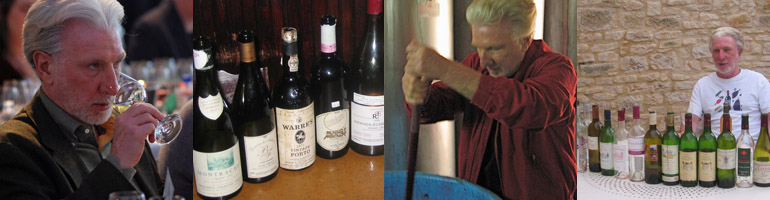
The EthicaWines 10th Anniversary Portfolio Tasting was held at one of my favorite Italian restaurants, Il Gattopardo in NYC.
 Ethica Wines has a wonderful portfolio of Italians. Their slogan is Italian wines, global reach. 23 producers were present at the tasting and there were over 40 wines to taste.
The four wines listed below are my favorites and I have a long and special relationship with each.
 Villa Bucci 2021 Castelli di Jesi Verdicchio Classico Villa Bucci Riserva . Made from 100% Verdicchio from Ostra Vetere, province of Ancona, Marche. There are 64 acres of Verdicchio planted. Made from the estate’s oldest, highest-altitude plots. The soil is calcareous and mildly clayey that encourages deep root systems. Large old Slavonian oak barrels of 50 HL are used to age the wine for two years. The winery has been fully certified organic since 1999/2002.
The winery was founded by Ampelio Bucci and the wine was produced with the help of the legendary enologist Giorgio Grai for over 30 years. It has been my honor to meet both of them on more then one occasion. Ampelio passed away recently and the winery was in 2024 acquired by the Veronesi family’s Oniverse group. This is a very complex, well balanced mouth filling white wine with hints of green apple, almond, herbs a hint of flint and a touch of anise with a long pleasing finish and aftertaste, This is a white wine that can really age. There is a restaurant in Amalfi that has these wines going back 10 years and more. It is always a pleasure to drink them.
 Alberico Lazio IGT 2020 Tenuta Principe Alberico made from 100% Semillon. Soil is of volcanic origin. Cooled crushed grapes are softly pressed and the must obtained is decanted. Fermentation in steel tanks. Indigenous yeasts carry on alcoholic fermentation. Aging is in 16 hI oak barrels and finally a further passage in barriques 18 months in the bottle before release. This is an exceptional balanced wine with complex aromas of subtle tropical fruit, hints of citrus fruit and a slight touch of vanilla with a very pleasing finish and a long aftertaste.
Allessia Antinori, daughter of Piero Antinori and granddaughter of Alberico Boncompagni Ludovisi Principe of Venosa who founded the winery in 1945, runs the winery. The winery is only 30 km from Rome across from the Ciampino Airport. I have visited the winery on a number of occasions and have met with Alessia in Rome and in NYC .
 Taurasi Riserva 2017 Mastroberardino The soil is poor in organic substances but has a high content of clay, limestone, minerals and microelements. The vineyards are on two hills, Mirabella vineyard at 500 meters and the Montemarano vineyard at 550 meters. Because of its position on the hill and its altitude, the temperature at the Montemarano vineyard is much colder and the grapes are picked a little later. Harvest is from the end of October into the beginning of November. The vinification is the classic one for red wine, long maceration with skin contact at controlled temperatures. The wine spends one year in Slovenian oak barrels and two years in bottle, the wine can be laid down for 10 to 15 years. The riserva stays in medium sized 40 to 50 HL oak casks for 2 years and 2 years in bottle. It can live in the bottle for 25-40 years. This is a full, complex wine with hints of black cherry, plum, spice, smoke and a touch of leather.
The family estate was founded in 1878. It was not until after WWll when Antonio Mastroberardino and his brother Walter took control of the winery that it became the leading winey not only in Campania but in all of Southern Italy. In the 1990, Walter left to establish his on winery and Antonio kept the Mastroberardino name The winery is now in the very capable hands of his son Piero. Antonio passed away in 2014. I only met Antonio once many years ago when I tasted first the legendary 1968 Taurasi Reserve.
 Borolo Cannubi 2020 Borgogno madę from 100% Nebbiolo from the highly regarded Cannubi vineyard with a southern exposure. The soil is calcareous and clay marl, lightly sandy. The vine training system is archetto variation of the Guyot system and there are 4,000 plants per hectare. Harvest takes place in October. Spontaneous fermentation carried out by indigenous yeasts for about 12 days in concrete tanks, controlled temperature (22 – 25 C initially, 29-30 at the end ), followed by submerged cup maceration for 40 – 50 days, stable temperature 29 C. After the racking off, the malolactic fermentation starts, and it lasts about 15 days at 22 C. Ageing: 4 years in Slavonian oak casks (4500L) with a further refining in bottle for 6 months.
This is a traditional old style Barolo with extended maceration and aging in large casks without selected yeasts. It has hints of raspberry, wild strawberry, cherry, licorice, tea, spice and a hint of violet. These wines can age. Over the last few years I have had wines from the 1947, 1958, and 1964 vintage to name just a few. It has always been my go-to Barolo for older wines.
The estate was managed by the Borgogno family for centuries (1761) until it was acquired in 2008 by the Farinetti family, of Eataly fame, who transitioned the estate to organic farming.
***
On another note, I was very sorry to read about the passing of Emidio Pepe this week. He was the legendary producer of Montepulciano d’Abruzzo , one of my favorite Italian red wines. He was 94 years old.


