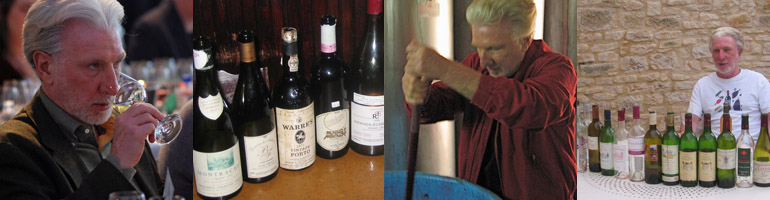
Alan Tardi is an award winning wine writer and wine educator, and in 2015 he became the first U.S. Ambassador of Conegliano Valdobbiadene Prosecco DOCG. When I saw Alan at a wine event recently, he invited me to a class he was giving on the wines of Conegliano Valdobbiadene in the Veneto. Having been to some of his other classes, and given his long career in the wine and food business, I was very happy to accept.
 The class was given at The New York Wine Studio at 126 East 38th Street New York, New York. info@newyoekwinestudio.com.
Alan had assembled a varied and interesting collection of wines from Conegliano Valdobbiadene, some which came directly from the producers in Italy, including Prosecco Superiore, Rive, Cartizze, Tranquillo (still), a Frizzante made from the Verdiso grape and a Passito.
Alan said that Prosecco is the leading selling sparkling wine in Italy today. It outsells Champagne in the UK, and sales of Prosecco increase every year in the United States. Prosecco is produced exclusively in the area of northeast Italy between the Dolomites and the Adriatic Sea. The production takes place in two regions, the Veneto and Friuli Venezia-Giulia in 9 provinces.
 Alan said his objective for the class was to clarify the critical difference between the original ancient Conegliano Valdobbiadene Prosecco and the DOC Prosecco that was established in 2010. DOC Prosecco occupies a huge, mostly flat area encompassing almost the entirety of the two regions and accounts for most of the 700+ million bottles of Prosecco produced each year. Conegliano Valdobbiadene Prosecco DOCG is a tiny area in the foothills of the Dolomites.
Prosecco DOCG must be made with at least 85% Glera grapes with the addition of Verdiso, Bianchetta, Trevigiana, Petera and Gela Lunga. Prosecco Superiore Spumante may also contain up to 15% of Pinot Bianco, Pinot Grigio, Pinot Nero and Chardonnay.
When at least a minimum of 85% of the wine comes from a specific vintage, the year may be indicated on the bottle along with the term Millesimato.
Prosecco may be made in 3 different styles: Spumante (bubbly), Frizzante, (lightly effervescent), or Tranquillo (still). Only the Spumante version is allowed to have the name Superiore.
Most sparking Proseccos are made using the Charmat Method, in an autoclave (pressurized tank). For metodo classico, it is also permitted to carry out the second fermentation in the bottle.
The vine training system for Prosecco can be double arched cane, sylvoz, guyot or metodo spalliera.
The Conegliano Valdobbiadene Prosecco Superiore zone is located in the region of the Veneto, about 50 kilometers north of Venice, midway between the Dolomite Mountains to the north and the Adriatic Sea to the south. The DOCG zone consists of 15 municipalities with the towns of Conegliano and Valdobbiadene at the eastern and western extremes. It extends over 20,000 hectares of which 6,500 are vineyards at altitudes of 50 to 500 meters.
Prosecco DOCG has three levels of sweetness: “Dry” 17-32 g/l, “Extra Dry” 12-17 g/l, and “Brut” 0 -12 g/l.
According to the Consorzio Tutela del Vino Conegliano Valdobbiadene DOCG, there is a “Prosecco Pyramid.” At the top is Valdobbiadene Superiore di Cartizze DOCG with 107 hectares, Conegliano Valdobbiadene Prosecco Superiore with15 townships, Colli Asoland DOCG Prosecco/Prosecco Superiore with 17 townships, Prosecco Treviso with 95 townships, and Prosecco DOC with 556 townships.
In 2009 a new category called Rive (hillside in local dialect) was added. This designation is for sparkling wine made entirely from the grapes of one particular village or hamlet, the name of which is listed on the label. Rive is always vintage dated. There are 43 officially recognized Rive. This gives more prominence to the subzones.
The best Prosecco is produced in the Conegliano/Valdobbiadene zone. However, there is a difference in the Prosecco produced in Valdobbiadene and Conegliano. Valdobbiadene produces lighter, more elegant wines with a mineral character. It gets more sun as it faces southwest and the soil is chalk and limestone so the wines must go deeper to get water. This area makes the best spumante. In Conegliano, the soil is clay and much heavier which gives the wine more body and makes it more rustic. It is closer to the Dolomites in the north and makes better frizzante wines.
The average vineyard holdings in the DOCG area are very small and most large producers have to buy their grapes from many different vineyard owners. The Cartizze is a sub-zone in the heart the DOCG area: 106 hectares of vineyards in the municipality of Valdobbiadene among the steepest slopes of San Pietro di Barbozzo, Santa Stefano and Saccol. This is a Super Cru and it is divided into very small plots with many different owners. Prosecco Superiore di Cartizze will cost two to three times as much as regular Prosecco. Alan Tardi said that Cartizze has always been considered the pinnacle of Conegliano Valdobbiadene production. The vineyards encompass 107 hectares and occupy an entire southwest-facing hillside. Its summit is in the village of Santo Stefano and then goes down in a steep patchwork of tiny terraced parcels to the Piave River. There are about 140 proprietors that work their small family plots by hand as they have been doing for generations.
 Colli Prosecco Tranquillo “IL CANTO ANTICO” 2023 Bortolomiol made from 100% Glera Tondo from the hills of Valdobbiadene. Training system autocthonous called “capuccina modificata.” Harvest is from September 20th to September 30th. There is a soft pressing of the grapes. Fermentation at a controlled temperature with selected yeasts. The wine rests from 1 to 3 months before release. Valdobbiadene Prosecco Tranquillo has no carbon dioxide or residual sugars and therefore must shine for its qualities alone. To be sure of its quality the maturation and selection of the grapes must be perfect. This is the only way to produce a noteworthy still Prosecco.The wine has hints of citrus, apple,pear and a note of apricot.
 Colli Trevigiani IGT Verdiso Fizzante Sui Lieviti. Gregoletto A very special wine made from the rare white Verdiso grape variety. Soil is sandstone and marl. The grapes are hand harvested. The average age of the vines is 20 years. Fermentation took place in stainless steel and was triggered by indigenous yeast. The refermentation for this sparkling wine took place in the bottle and not in conventional, pressurized tanks. The grapes were gently pressed in pneumatic presses, and fermented by indigenous yeast in temperature controlled stainless steel tanks. It remained on the fine lees for another three months after which it is bottled. During the following spring, when ambient temperatures rise, the wine in the bottle naturally starts to referment, which results in a fine sparkle. The wine is not disgorged, but remains for all its life on its lees until the moment it is poured just as in the past. This is the reason the bottle is closed with a crown cork.
Serving note: decant and/or pour straight from the bottle that has been standing up for 15 minutes to allow the lees to fall to the bottom of the bottle. Or serve it as it comes right out of the cask. The wine has hints of citrus fruit, fresh apple, pear and apricot
 Valdobbiadene Prosecco DOCG “Progetto 5 Varietà” Brut 2023 Marchiori. Made from 85% Glera Tonda, 2% Glera Lunga, 3% Bianchetta, 5% Verdiso and 5% Perera, The vineyards are 240 to 400 meters and the soil is lean with a prevalence of calcareous conglomerate rock (puddingstone) in the hilltop and crest areas; pockets of calcareous marl and sandstone in the middle slope areas; renewal of organic matter with cover crops and compost. The steep hills face southwest, south, southeast and west. There are 4,000 vines per hectare and the training method is double arched cane.
Sustainable, low-impact cultivation according to the lunar calendar. There is a soft pressing of grapes, static decantation and fermentation at controlled temperatures. Manual harvesting in the month of September; boxes with holes are used.
Maturation: in temperature-controlled stainless steel tanks, in contact with the lees. Grapes are sorted on a table, soft pressed, must division is performed and fermentation is started. Fermentation is in stainless steel tanks at a controlled temperature with native selected yeasts. The wine is refined two times at the end of the cycle and low temperature aging takes place. Blending of the wines is with the first waning moon of the new year. The session fermentation is by the Valdobbiadene method by which the wine spends 50 days in an autoclave. The wine has hints of pears, pink grapefruit, herbs, mint with a hint of fresh wisteria and a note of roasted barley.
 Conegliano Prosecco Superiore DOCG Rive di Ogliano Brut Natural 2022 BiancaVigna made from 100% Glera from vineyards at 150 to 180 meters. The soil is clayey, limestone and rocky clay. Estate-owned vineyards are located in Ogliano. Named after the “Riva di Ogliano,” the steep hill where the grapes used to make this wine grow. Harvest is in the middle of September. Prise de mousse (sparkling process): the second fermentation takes place in stainless steel tanks (cuvée close) at controlled temperatures with indigenous selected yeasts and lasts 150 days. Tartaric stabilization at low temperature. Bottle refinement for three months before release. This is a complex wine with hints of green apple, pear, peach, stone fruits and floral notes, Alcohol: 11.5. Residual Sugar 1.5 g/l.
 Conegliano Prosecco Superiore DOCG “S. C. 1931” Metodo Classico Pas Dosé 2018. Bellenda The first Prosecco Superiore made by the Classic Method. The glera grapes are cultivated in the Carpesica area, in limestone-clay soils rich in morainic deposits from the ancient Piave glacier that descended from the Fadalto saddle between Mount Pizzoc and Mount Visentin. The vineyards, facing south-southwest at an average elevation of 180 meters, are planted to an average density of 4,200 vines per hectare and are trained to the Sylvoz system. Harvest generally occurs in the second half of September and the vineyard yield averages 85 hl/ha. The weather is mild, with cold winters and summers that are warm, but never muggy and with consistent breezes. The day-night temperature differentials are significant, particularly in the summer. After the clusters are de-stemmed and the grapes gently pressed, the must is gravity-settled then fermented partly in steel and partly in oak barrels, with no temperature control. The wine matures sur lie for 3 months. After the second fermentation in the bottle, the wine rests sur lie for 16-18 months, and is then disgorged and topped up with the same wine, with no liqueur d’expédition. The wine has hints of hazelnut, apple, pear, acacia honey, a touch of fresh baked rolls and a note of apple cake.
Note: The wine takes its name from the initials of Sergio Cosmo, Bellenda’s founder, and his year of birth.
 Superiore di Cartizze DOCG “Private” Rifermentato in Bottiglia 2014 Bisol made from 100% Glera Tonda. The grapes are from the top of the hill in the prestigious Cartizze sub-zone of Valdobbiadene. The wine is aged for 22 months on the lees. This was unlike any Prosecco I have tasted before and I just do not know how to describe it because it would not be good enough. I really enjoyed it.
 Superiore di Cartizze DOCG Brut Ruggeri made from 85% Gerla and other local white grape varieties 15%. Harvest is in September. Vinification is off the skins at a controlled temperature of 16 °C. Slow second refermentation in large sealed vats at 14 – 15 °C. The wine has hints of peach, yellow apple, citrus cruit and a floral note.
 Valdobbiadene Prosecco Superiore DOCG Dry Rive di Colbertardo Vigneto Giardino, Adami Made from 100% Glera from Vigneto Giardino, a naturally south-facing vineyard at 200 to 250 meters. The soil is calcareous with clay rock substrates, dry, infertile and shallow. There are 2,550 t0 3,000 vines per hectare and the training system is double arched cane. Harvest is from September 30 to October 10. The clusters are pressed in pneumatic presses and the must is given a gravity settling for clarification. It is naturally fermented with cultured yeasts at 17-19°C, then the wine matures a minimum of six months sur lie in steel. It receives its effervescence via the Italian Method, at 15-17°C. and the resultant sparkling wine is then cold-stabilized at -4°C. The wine has hints of apple, peach, notes of wisteria and acacia, and a touch of citrus.
Vigneto Giardino represents the denomination’s very first single-vineyard Valdobbiadene DOCG. It debuted as Riva Giardino Asciutto in 1933 in Siena, at the 1° Mostra Mercato dei Vini Tipici d’Italia (1st Exhibition of Traditional Wines of Italy), and ideally exemplifies what Adami characterizes as its macedonia (fruit salad in Italian): the crisp fragrance of a harvest-box of fresh-picked fruit.
 Torchiato di Fregona Passito Colli di Conegliano DOCG “Ciàcoe” 2016. Ca’Di Rajo. Made from Glera 30%, Verdiso 20%, Boschera 20%, Bianchetta and Daocio 30%. The soil is clayey and rich in limestone, sandstone and pebbles. The vineyards are at 30 meters. Harvest is in mid-September. There is a post harvest withering process in the drying room for at least 120 days. Then the wine ages for at least 24 months in tonneaux. Residual sugar g/l 150 and the alcohol is 15.5%. This is wine with rich aromas of ripe fruit, jam, withered and and dried grapes, apricots, raisins, figs with a note of citrus fruit and subtle spices. In the mouth it is soft, intense and persistent. The acidity elegantly supports the high residual sugar while never appearing overpowering: it is sweet but with a bitter aftertaste. A wine that is balanced and at the same time lively due to the high alcohol content. This is the first time I has a passito made from these grapes and I was very impressed
I learned a lot in this class, as I always do when Alan Tardi is teaching. Thanks for inviting me, Alan!
To contact Alan Tardi email: alan.r.tardi@gmail.com. website: alantardi.com


