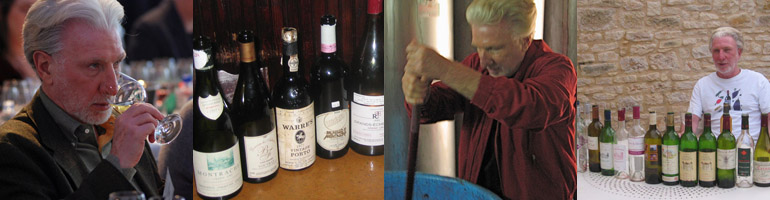

Blind tastings are not easy, they demand a great deal of concentration and skill to interpret. Added to this is the essential factor of the sequence in which the wines are presented.
After decades of blind tastings, I would like to share with you what I have understood and what are the pros and cons of this method. There are those who believe it is sufficient to cover the labels in order to be impartial and “objective” and I must say that while this point of view is based on good intentions it is also somewhat naïve.
This because blind tastings are more difficult than one would assume and it is not unusual to be totally in left field. It is not uncommon to lose concentration when you try to guess and when the tastings are done as a panel and the samples are many resulting in an unescapable tendency to prefer wines that are more immediate and have greater body, no matter what their type and origin. You have to be skilled to taste under these conditions, you have to be consistently concentrated and understand when you have to take an interpretive leap, to place the wines in their proper framework rather than judge them based only on an organoleptic point of view according to one’s owe tastes.
Allow me to cite an example to better explain myself. Years ago, during a group tasting of Langhe wines for the Gambero Rosso and Slow Food guide, there was a fan and almost a fanatic for the wines of Bruno Giacosa. The Barolo were great, the Barbaresco traditional, elegant and complex but certainly not outstanding for structure. During the blind tasting, however, he consistently rated these wines below the others, which may have had a more modern style and a body with less of a punch. When the labels were uncovered, he first protested that, evidently, the samples were defective, but later he wanted someplace to hide. He then asked that his reviews be taken out of consideration because that day he was clearly out of sorts or some other excuse. And this was a person of high esteem and skill, yet one who in a context like this one became somewhat confused and lost his bearings amid all these wines.
This is just one example but I could tell you of many others that took place during similar “blind tastings”, including some in which the producer himself gave a “thumbs down” to his own wine, not having recognized it, or when a famous enologist had to agree with the opinion of a less esteemed colleague. The drama was almost comic.
The truth be told, “blind tastings” are a great exercise, they allow you to understand many things, they allow you to avoid bias, even unintentional, but to end up with a reliable conclusion certain parameters need to be respected. One is to place a certain wine in different flights to see it gets the same rating or something similar. If a higher level of wine is placed with distinctly inferior ones, it will stand out. If it is place with top-self wines, then it will not shine so brightly.
It should be clear that all this has little to do with “objectivity”. A key factor is the technical expertise of the taster, along with their ability to concentrate and hold up. Tasting a slew of wines is not like working in a mine but it can be more trying and, at times, even more boring than one would imagine. Sometimes you get tired, without knowing it, and slip into giving imprecise and unreliable reviews and ratings. Thus one needs to pace and manage their own efficiency. Not everyone can run a marathon, it takes training. The same goes for tastings and it is important to realise this. The bottom line is that while “blind” ratings are all well and good, sometimes the verdict is on he who judges.
 Albano Secco “ I Croppi” 2019 Celli made from 100% Albana. Production area Bertinoro. The soil is a clayey mixture with limestone and the exposure is east-south east. There are 3,000 to 500 plants per hectare and the training system is double guyot. Harvest was the first week of September. Fermentation is in stainless steel tanks as is the aging. The wine has hints of yellow peaches, apricots, a touch of citrus with salty and mineral notes. Imported by SolStars Inc.

 Romagna Sangiovese Predappio 2018 Notturno Drei Dona – La Palazza made from 100% Sangiovese from the best grapes in their vineyards. There are 3,300 and 5,000 plants per hectare. Fermentation is in steel and concrete at a controlled temperature. The grapes are harvested, vinified and aged separately then assembled to complete the wine. The wine is aged for about one year is 15 and 25HL traditional casks and 500 liter tonneaux. The wine is bottled unfiltered. The wine has hints of dark red fruit, blackberries and blueberries, a touch of sweet spice and a note of caramel. Daniele said this estate is a point of reference not only for wine lovers but also for other producers. Imported by LNJ Brands, Inc
 Sangiovese Superiore I Diavoli Le Rocche Malatestiane made from 100% sangiovese from vineyards between San Clemente and Gemmano in Rimini. The soil is tinted clay and chalk adjacent to the town of Gemmano at 250 meters. The wine is aged for six months in concrete tanks and one month is steel tanks. The production area for I Diavoli is close to the Natural Reserve of Onferno, called inferno (hell), because of the vapor rising from the crevasses and the bats, “the devils,” who lived in the underlining karst caves. The wine has hints of black cherry, blueberries, wildflowers and a touch of spice. It is part of the Cevico Group with 5,000 suppliers-partners that offers well-made wines at affordable prices. Imported by Terre Cevico
 Sangiovese Riserva Bertinoro 2014 Fattoria Paradiso made from 100% from the Vigna Delle Lepri Sangiovese Grosso. The wine is aged in cask for 18 months and 6 months in barriques followed by 12 months in bottle before release. I visited the winery a number of years ago and was impressed by this particular wine. The wine will be available in the US early this year. The wine has hints of blackberry, black cherry, licorice, dried roses and a touch of chocolate. Imported by Panebianco LLC
 Romagna Sangiovese Predappio 2018 Noelia Ricci La Pandolfa 100% Sangiovese large berried type (Romagna biotype) from the Godenza vineyard in San Cristoforo in Foli. The vineyard is at 300 to 340 meters and the soil is ochre-colored clay and calcareous marl, with traces of sand. Vines were planted in 1999. There are 4,500 plants per hectare and they are spurred-cordon trained. Manual harvest the second week of September. Grapes from different clones are harvested together for fermentation. Fermentation and maceration take place on the skins in temperature-controlled stainless steel tanks. Skin contact for about 28 days followed by 8 months in steel tanks and 12 months in bottle before release. The winery is converting to organic farming. The wine has hints of red fruit, raspberries and with a hint of spice.

 We started with chicken livers with onions on crostini. A drizzle of high quality balsamic vinegar and sprinkle of flaky salt really enhanced the flavor.
 On the plate
 Meursault – Perrieres 1995 Robert Amprau et Fils Located in the Puligny – Montrachet region of Burgundy covering 10 hectares of vineyards. They harvest by machine and allow other plants to grow between the rows of vines. The wines are not released by the winery until they are ready to drink. The wines are fermented without stalks in cement cuvees and aged in barriques, mostly used for 10 months. The wine has hints of ripe fruit, honey, apricot, nuts and a touch of brioche. The wine is at its peak.
 For extra crispy skin, Michele first butterflied the chicken, then left it uncovered in the refrigerator overnight so that the skin was very dry. The result was great. Moist meat and crispy skin.
 Broccoli rabe with garlic
 Mashed Potatoes with lots of butter
 It was a simple meal, just what we wanted after the holiday feasting.
 The wine Volany-Lantenots 1999 Robert Ampeau et Fils made from 100% Pinot Noir. This Premier cru, is actually located in Meursault, is sold as Volnay. This is a complex wine with dark ripe fruit aromas and flavors, hints of strawberries, cherries, currents, plum and a touch of spice. It is a very impressive Burgundy.
 A bloomy rind French cheese, the name of which I cannot recall, was all we needed to finish the wine.
 We enjoyed slices of pannetone for dessert.
 Followed by just a small glass of Vieil Armagnac 1983
 Brut Methode Traditional 2018 made from 100% Gringet, an endemic grape variety of Savoie France Domaine Belluard. The vineyard is at 450 meters and the exposure is south. The soil is chalky of the Chablais mountains with little stones. Glacier sediments: yellow marls. Hand-operate harvest. There is a very soft pressing of the grapes. Traditional vinification with alcoholic and malolactic fermentation with native bacteria and yeast. 60% of the vinification is carried out in an egg-shaped concrete vat. Rough filtration on egg whites. The wine has floral notes, pleasant fruity aromas and flavors with a slight hint of minerality. The winery is located in the heart of the valley of the Arve between Geneva and Chamonix Mont-Blanc.
 Domaine Rolet Pere et Fils “Cremant Du Jura” NV made from 57% Chardonnay, 16% Savagnin, 16% Poulsard and 11% Pinot Noir from 20 year old vines at 280 to 380 meters. The soil is gray marl and there are two meters of topsoil before hitting mother rock. Only indigenous yeast is used. Fermentation and aging is in tanks. The wine remains on the lees for 24 months. It is medium bodied, dry with good minerality, hints of citrus fruit, yeasty notes and a touch of white flowers.


 Michele had made gougeres, parmesan cheese puffs, to go with the Champagne.


 With the main course we had Gigondas 2005 Domaine Raspail AY (Magnum) made from 80% Grenache, 15% Syrah and 6% Mourvedre. The wine is aged in old fundres and then in barrels for 18 to 24 months. This is a complex wine that has hints of black fruit, cherry, raspberry, leather and a touch of violets and spice. It has a very pleasing aftertaste and a long finish and it was a pleasure to drink as well as a perfect match with the cassoulet.
 Our friends also brought us a loaf of artisan sourdough bread from Breads Bakery, a beautiful rustic loaf to eat with the cassoulet.
 Cassoulet on the plate
 After the cassoulet, we had a simple salad of arugula, radicchio, fennel and orange wedges with sherry vinegar and extra virgin olive oil dressing.
 There were two cheeses to finish the wine, one was a bloomy rind Pave from France and the other was a semifirm Alta Badia from Italy
 For dessert, Michele made individual apple tarts served warm and topped with vanilla ice cream.

 Veuve Clicquot Brut NV made from 56% Pinot Noir, 16% Pinot Meunier and 28% Chardonnay. This is easy drinking Champagne, toasty with black fruit aromas and flavors.
 Gosset Champagne Brut Excellence made from 24% Pinot Noir, 36% Chardonnay and 19% Pinot Meunier from Ay-Chapmpagne, Chigny-les-Roses, Courmas, Cumieres, Avize, Cuis and Trepail. There is 100% malolactic fermentation. The wine spends 30 months in the cellar before it is disgorged. Dosage for the Brut is11g/L. It has hints of apricots, peaches, dried fruit and a touch of brioche.
 Champagne Boizel 2007 made from 40% Chardonnay, 50% Pinot Noir and 10% Pinot Meunier. 3% of the wines were aged in oak casks. The wines were aged for 7 years on the lees. This is elegant Champagne with hints of apricot, biscuits, flowers, almonds and a touch of licorice.
 Champagne Dom Pérignon 2008 made from equal amounts of Chardonnay and Pinot Noir. The grapes come from five Grand Cru villages and one Premier Cru village. This is a very impressive champagne with great balance, elegance and complex aromas and flavors.
 Champagne Marguet “Shaman 14” Grand Cru NV made from 69% Pinot Noir and 31% Chardonnay. The wine was bottled July 2016, and the disgorgement date was March 2018. There are no added sulfites and the dosage is 0. It has flavors of honeysuckle, lemon, apple and a touch of stone fruit.
 Selosse Substance Avize is the essence in a single vintage from two parcels without regard to vintage variation. Always made from the same Chardonnay vineyards in Avize. A south facing slope and an east hill base. Made from a solera started in 1987. Each year 22% is taken from the solera. Dosage 0-4g/l. It has hints of apricots, pears, loads of wet stone minerality, white flowers, pumpkin pie spice, mulled cider and the signature oxidation. It may be the most unusual champagne I have ever tasted.
 Alfred Gratien Brut Rosè NV made from 45% Chardonnay, 40% Pinot Meunier and 15% . The Pinot Noir is added as a still wine. After 6 months of cellaring in 228 liter oak casks, the must is transformed into wine. Malolactic fermentation does not take place. The cuvee is bottled with sugar and yeast to allow for a secondary fermentation in the bottle and it remains in the cellar for 36 months. Then the disgorging takes place where the lees and sediment are removed from the bottle which is topped up with more wine and some sugar and left to rest for a few more months in the cellar. It has good red fruit with hints of raspberry and strawberries and touch of roses.
 Suenen Champagne Oiry Blancs De Blancs Grand Cru Extra Brut made from 100% Chardonnay from the Grand Cru village of Cramant. The soil is chalk. The vins clairs (clear wines) are fermented partially in barrel and spend 9 months on the lees. The dosage is 2g/L. This is a delicate dry wine with floral aromatics, hints of green apple, a note of yellow plums and a touch of lemon with high acidity.
 Larmandier-Bernier “Latitude” Extra Brut Blanc De Blancs NV. Made from 100% Chardonnay grapes which come from the same Latitude in the southern part of Vertus. There is 40% reserve wine in the blend and the dosage is 4g/l. The wine has hints of peach, white flowers, toast and a touch of almonds.

 Champagne Krug Grande Cuvèe 167EME EDITION This is a blend of 191 wines from 13 different years, the youngest is from 2011 and the oldest goes back to 1995. The final blend is 47% Pinot Noir 36% Chardonnay and17% Meunier. It is aged for about 7 years before it is released. The Champagne has hints of dried and citrus fruit, a touch of gingerbread, hints of hazelnuts, and brioche. It is Michele’s favorite Champagne.


 Barbaresco 1979 Giovannini Moresco made from 100% Nebbiolo. Sheldon Wasserman in his book “Italy’s Noble Red Wines” calls this the wine of the vintage. The grapes are harvested late when they are totally ripe and the yields are low because of severe pruning. The Podere del Pajore vineyard is planted in the rose sub-variety of Nebbiolo. After the 1979 vintage, the wines were made by Angelo Gaja according to Moresco’s instructions. A few years later the vineyard was sold to Gaja. Wasserman tasted this wine 14 times in March 1985 — that is how much he liked it. Now 41 years later it is still a great wine, rich, and complex with hints of tobacco, black cherry, truffles, faded roses and so much more. It has a most pleasing aftertaste and a very long finish.
 By Sunday morning, the truffles had arrived. It was like Christmas morning but for grownups.
 We set the table
 For our first course, Michele made Eggs in Coccotte. Eggs baked in a puddle of cream and Parmigiano Reggiano.
 Then we shaved the truffles on top. The heat of the eggs released the truffle fragrance. With it, we had two white wines.
 Meursault “Les Chevalieres” 2008 Jean-Philippe Fichet made from 100% Chardonnay from a hillside vineyard with east/northeast exposure. The soil is limestone clay with a lot of limestone pebbles. The farming is organic. The grapes are hand harvested. Fermentation with malolactic is in barrel. Batonnage is limited depending on the health of the lees and the nature of the vintage. The wine is aged in barrel (1/6 new for 12 months and 3 to 6 months is tank. This is a fresh refined wine with hints of pear, apple and citrus notes with good minerality and a long finish.
 Meursault-Perrieres 1995 Robert Ampeau & Fils made from 100% Chardonnay. Located in the Puligny – Montrachet region of Burgundy covering 10 hectares of vineyards. They harvest by machine and allow other plants to grow between the rows of vines. The wines are not released by the winery until they feel they are ready to drink. The wines are fermented without stalks in cement cuvees and aged in barriques, mostly used, for 10 months. The wine has hints of ripe citrus fruit honey and nuts with mineral notes and good acidity. It went especially well with the eggs and truffles.
 For our main course there was fresh fettuccine, tossed with butter and cream and topped with more truffles.
 In the dish with the truffles. Simple is best with white truffles and the fettuccine, purchased at Eataly, were the right complement.
 Barolo “Brunate” 1974 Marcarini made from 100% Nebbiolo. For many years Elvio Cogno was the winemaker for the Poderi Marcarini in La Morra. His Barolo from the La Serra and Brunate Vineyards were exceptional. In Italy’s Noble Red Wines, Wasserman gives 2- stars to the 1974 vintage and wrote, “… the vintage has not lived up to its expectations, though without question a few splendid wines were made.” When he tasted the Cogno – Marcarini 1974 in 1984, he wrote, “Floral bouquet recalls tobacco and cherry, soft with a tannic vein, a shade astringent but still in all very good.” This was one of the few splendid wines
 After the pasta, there was Insalata Tricolore with arugula, endive and radicchio.
 The dessert was from a local bakery.
 It was a chilly night so I was very happy to have dinner by the fireplace.
 We started with a rabbit pate and cornichons from a local cheese shop.
 There were also fresh figs wrapped in prosciutto.
 For the main course there were slow cooked lamb shanks with white beans and gremolata, a recipe from Michele’s book,
 Rosso del Conte 1981 Tasca d’ Almerita Nero d’Avola 90% and 10% Perricone. Production area Palermo, Sicily. The soil is fine clay slightly calcareous. It is at 650 meters with a south-west exposure. The training system is bush and espalier, with short spur pruning. There are 4,000 vines per hectare and the harvest is in October. Traditional red wine fermentation in stainless steel and maceration for 25 days. The wine is aged in large chestnut casks and then 6 months in bottle before release. This is a very impressive wine with hints of cherries dried red fruit. herbs and a touch spice and tobacco.

 And a cheese selection, including a perfect Vacherin
 A goat cheese, and a blue.
 Chateauneuf du Pape “Vignobles de la Lerriere” 2006 Beauchene made from 65% Grenache, 30% Syrah and 5% Mourvedre. The terroir is a mix of galets and sandy soil. The wine is aged for 12 months in used French oak barriques. This is a medium bodied soft round wine with ripe red fruit flavors hints of raspberries and red cherries and a touch of spice. The wine has a nice aftertaste and a long finish. It was a pleasure to drink
 Dessert wasn’t really necessary, but Michele had brought some freshly made Biscotti Regina, Sicilian sesame cookies, so that we could finish the meal on a sweet note.


 Michele made Ricotta Gnocchi with a simple tomato sauce from her book,


 Chicken with Red Wine, Olives and Herbs ready to be served
 On the plate

