Category Archives: Italian Red Wine

Chianti: The Best Known Wine and the Least Known Wine

There are many great grape varieties in Italy but it if I was forced to choose a favorite, it would be Sangiovese. Wines made from the Sangiovese grape are the perfect wines to go with food. They have bright fruit flavors,  hints of violets, and good acidity.  The best wine made from the Sangiovese grape is Chianti from Tuscany.IMG_7713

For the last four  years I have been attending the annual seminar and tasting presented by the Consorzio Vino Chianti. I enjoy these seminars, the guided tasting, listening to the speakers and catching up on the latest news from one of my favorite wine regions. This year was was no exception.

Ray Isle of Food & Wine Magazine introduced the three panelists for the guided tasting: Sarah Bray of Town and Country Magazine, Luize Alberto of WineHub, and Giovanni Busi, president of the Consorzio Vino Chianti and owner of Villa Travignoli.IMG_7716

Mr. Busi seemed to set the tone of the seminar when he said that “Chianti is one of the best know wines and one of the least known wines.” This led  to the panelists discussing Chianti in the market place, the beauty of the Tuscan landscape, the confusion with Chianti Classico and what could the Consortium do  to help consumers better understand Chianti and improve its market share.

IMG_7855

The Chianti Lands

The panelists agreed that by having these seminars and tastings the Consortium was doing it best to promote Chianti. The confusion with Chianti Classico may be hard to overcome. Near the end of the seminar the woman next to me whispered, “I have been drinking Chianti all my life and I thought that all Chianti had a  black rooster on the neck of the bottle.”

Mr. Busi discussed the grapes that are used to make Chianti and how the wine is aged. Chianti must be at least 70% Sangiovese but the law has limited the amount of international grapes such as Merlot to 10%. Traditional Tuscan grapes like Canaiolo can also be used up to 30% as well as Trebbiano and Malvasia, which are white grapes. Mr. Busi wanted to change the law so that Chianti to allow that the wine can be made from 100% Sangiovese and this was recently approved.

Chianti may be released on March 1st of the year following the harvest. The sub-regions of Montalbano, Arentini, Pisane and Senesi may also be released on March 1st after the harvest. The sub-regions of Montespertoli may be released on June 1st. The sub-regions of Fiorentini and Rufina may be released on September 1st of the year following the harvest. Chianti Superiore may be released on September 1st of the year following the harvest.

For the Riserva the wine must be aged a minimum of two years from January 1st following the harvest.  For Chianti Fiorentini and Rufina, the Riserva has to spend at lest 6 months in wood. For the Chianti Senesi Riserva the wine must spend at least 8 months in wood and 4 months in bottle.

IMG_7856

The panel also discussed the Chianti Consortium and the production zones for Chianti. The Consorzio Vino Chianti was established in 1927 by a group of wine producers in the provinces of Pistoia, Siena, Arezzo and Florence. Later the Consorzio expanded to cover the whole production area covered by the DOCG. Now the Chianti production area is located in the provinces of Arezzo, Florence, Pisa, Pistoia, Prato and Siena. Chianti wines are designated as: Colli Aretini, Colli Fiorentini, Colli Senesi, Colline Pisane, Montalbano, Rufina, and the last, added in 1997, Montespertoli.  In addition is the return of the Chianti “Superiore” which can come from anywhere in the Chianti wine area with the exception of the Chianti Classico zone between Florence and Siena. Superiore cannot have a name of an area on the label. There is also the Colli dell’ Etruria Centrale. The DOC permits in the Chianti DOCG area the production of wines of a different quality from Chianti, which include reds, whites, roses, novello and Vin Santo.

The Wines

The tasting was blind in that we were not given the names of the producers. All other information about the wine was given to us.IMG_7717

Chianti DOCG 2013 San Vito 100 % Sangiovese. The soil is sandy clay and the exposure is southwest/northwest. The training system is spurred cordon, the vines are 20 years old and are at 150 meters.  Organic farming is practiced. Fermentation with 8 to 10 days of maceration on the skins with regular pumping over. The wine matures in steel and g;ass-lined vats and is aged for another 3 months in bottle.  This is an easy drinking wine with hints of cherry, blackberries and a touch of violet. It is a perfect food wine.IMG_7718

Chianti DOCG 2012 Priore 90% Sangiovese and 10% Cabernet Sauvignon. The soil is rich in organic material. The vineyards are at 300 meters and face south. The vines are 15 years old and are spurred cordon trained. Aging takes place in stainless steel vats for at least 12 months and in second passage  oak barrels for at least 5 months. The wine remains in the bottle for another 6 months before it is released. It has hints of violets, cherries and a touch of prune.IMG_7719

Chianti Colli Fiorentini DOCG 2001 Il Castelvecchio 90% Sangiovese and 10% Merlot. The soil is made up of clay, sandstone, gravel and stone. The vineyard is at 250-300 meters, with the Sangiovese  facing west and the Merlot northwest. The vines are 18 years old and the training is guyot. Fermentation takes place in temperature controlled stainless steel tanks for 14 days with a slow maceration. There is a pressing of the grapes and a daily pumping over. The wine spends 12 months in different size oak barrels and second passage barriques. The wines remains in bottle for 3 months before release. It has hints of red berries, with a nice finish and aftertaste.IMG_7720

Chianti Colli Fiorentini Riserva  “San Camillo”2010 Il  Corno 100% Sangiovese. The vines are 15 to 20 years old, south facing at 350 meters and the training system is spurred cordon. Fermentation in stainless steel vats and the malolactic fermentation is in concrete tanks. The wine is aged for 6 months in large barrels and 3 months in bottle before release. It has hints of spice, pepper and nice mineralityIMG_7721

Chianti DOCG Riserva 2009 Casalbosco 100% Sangiovese. The soil is made up of rocks and clay, the exposure is south/southwest, the age of the vines is 15 years and the training system is spurred cordon. Fermentation is in stainless steel vats. The wine is aged in second passage medium toasted barriques for 12 months and spens 6 months in bottle before release. The wine had hints of cherry and plum.IMG_7722

Chianti Colli Senesi Riserva 2008 DOCG 95% Sangiovese and 5% Colorino Coppiole. The hillside vineyards have mixed soils with a prevalence of sand. The vines are 25 to 30 years old and are at 300 meters. The exposure is south/southwest and the training system guyot. The wine spends 12 to 15 months in tonneaux (500 liters) and 12 months in cement vats. It remains in the bottle for another 4 to 8 months before it is released. It is a fruity wine with hints of cherry and spice and a nice finish and aftertaste.

I was very pleased with the wines chosen for the seminar because they were a true expression of the Sangiovese grape and of the Tuscan terroir which makes Chianti so unique and a wonderful  food wine.


Leave a comment

Filed under Chianti, Italian Red Wine, Italian Wine

Milan to Venice: Eating and Drinking

For many years on and off, I had gone to Vinitaly, the wine fair in Verona, though eight years had passed since the last time. This year, Nicole and Travis, owners of Turtledove wine store in Manhattan were going and wanted to know if Michele and I would like to go with them. Michele said no, but I said yes. The trip turned out to be more about eating and drinking than about the wine fair.IMG_7527

I arrived in Milan to very nice weather and joined Travis and Nicole for lunch at Bacaro del Sambuco, Via Montenapoleone 13. This is the most fashionable street in Milan and the restaurant is open only for lunch Monday to Friday. The afternoon was warm and we sat outside in the lovely garden. Most of the customers were stylishly dressed women that had stopped in after a morning of shopping.IMG_7531

I had an excellent lemon pappardelle with anchovies followed by one of my favorites, langoustine. We drank a Franciacorta metodo classico spumante.

That night we went to Trattoria Milanese, Via Santa Marta 11. Michele and I had eaten here a number of years ago when she was doing an article for the Wine Spectator. She still talks about the risotto.IMG_7533

This time we started with an assortment of salumi with bresaola and lardo. I had cotechino with mashed potatoes and lentils.IMG_7534

I tried to order the risotto but the waiter said it was too much food! For dessert I had the fragolini del bosco with gelato.

Milan to Bardolino

Traverna Kus di Zanolli Giancarlo in San Zeno di Montagna, Contrada Castello 14. Michele and I had been here for lunch in May and the restaurant was crowded. We liked it so much that I decided to come back.IMG_7583

The restaurant is in on the ground floor of a restored 17th century farmhouse. There are three interior rooms, a glass enclosed veranda and outside tables for summer dining. We sat in the veranda.IMG_7584

This time we were the only customers. I started with culatello with mostarda,IMG_7587

then ravioli stuffed with asparagus and then a selection of cheese with more mostarda.IMG_7589

For dessert I had a Millefoglie Vite.

With the meal we drank Terre Alte Collio Orientali del Friuli  2012 Livio Felluga a blend of estate grown grapes: Friulano, Pinot Bianco and Sauvignon Blanc from the vineyards in the Rosazzo zone. The soil is marl and sandstone and the training system is guyot. The bunches of grapes are carefully destemmed and left to macerate for a short period of time before crushing. The must is then allowed to settle.IMG_7585

Pinot Bianco and Sauvignon are fermented at controlled temperatures in stainless steel tanks. The Friulano is fermented and aged in small casks of French (no new oak is used) oak. The Pinot Bianco and Sauvignon mature in stainless steel tanks. After aging for ten months the wines are blended. The bottled wine is aged in temperature controlled binning cellars for 9 months before release. The wine has a touch of sage, hints of pear, peach and fresh almonds.IMG_7586

Schioppettino di Cialla 2007 Ronchi di Cialla (Friuli) 100% Schioppettino. The 1-hectare vineyard is at 165-180 meters with a south/southeast exposure. The wine ages for four years, 14 to 18 months in barrel and 30 to 36 months in bottle before it is released. This was one of my favorite wines but I have not had it in a long time so I had to order it. It was as I remembered it, hints of dark black fruit, spice, white pepper and a touch of leather. It can age for 20 years or more 

Antica Locanda Mincio, Via Buonarroti 12- 37067 Valeggio sul Mincio. This is one of Michele’s favorite outdoor places for lunch, sitting at a table overlooking the Mincio River and the medieval village. This time I sat inside because we had dinner and it was March. The dining room has a large fireplace and colorful mural on the walls, which creates a medieval atmosphere.IMG_7551

We started with Bresaola and I had Polenta with Salame, which I have every time I come here, followed by a specialty of the region tortelli di zucca and another favorite stinco di maiale, roasted pork shank.IMG_7549

We drank a Trebbiano d’Abruzzo 2005 from E. Valentino 100% Trebbiano. The wine is aged in large botti of Slavonian oak for 24 months. This was a very complex full wine with a mineral character, hints of citrus fruit and apple, good acidity, great finish and aftertaste with that extra something that is difficult to describe.

Ristorante Piccolo Doge, Via Santa Cristina 46, Bardolino.

When Michele and I were on Lake Garda last year, we passed this restaurant several times on the way into Bardolino. From the outside it looked a little overdone with lights and Venetian trappings, so we never stopped there. This time the restaurant I had planned to go to was booked, so the receptionist at our hotel suggested it. It was a good choice since the food was excellent as was the service. There is an outdoor patio for summer dining overlooking the lake, which I imagine would be very pleasant.

I started with a warm octopus salad with potatoes and olives. The octopus was cooked just right.IMG_7578

Bigoli, a kind of thick spaghetti with sardines Venetian-style followed and I could not resist the grilled white fish from Lake Garda. For dessert, there was a delicious cake with pine nuts.

Since we were having fish we ordered sparkling wine.IMG_7577

Ferrari Perlé 2007 Trento DOC Method Classico Vintage Blanc de Blancs 100% Chardonnay. The grapes are harvested by hand in the middle of September from a hillside owned by the Lunelli family around the Trento vineyards. The vineyards are 300 to 700 meters above sea level with a southeasterly or southwesterly exposure. The wine remains for about 5 years on the lees. It is a crisp dry wine with hints of apple, almonds and a touch of toast.IMG_7576

To our surprise there was a Moèt and Chandon Cuvèe Dom Pèrignon 2003 on the wine list for less money than it would sell for retail in NYC. It is made from 50% Chardonnay and 50% Pinot Noir. We ordered it and it was wonderful and could last for another 15 years.

On our way from Bardolino to Venice we stopped for lunch at Le Calandre in Rubino. They have a choice of three tasting menus, we ordered the Tinto, the spring tasting menu, which was very elaborate.

With all this food we had to have wine:IMG_7603

Champagne “Substance” Brut Jacques Selosse

We started with Champagne “Substance” 100% Chardonnay Grand Cru Blanc de Blancs Jacques Selosse. Low yields; organic viniculture and terroir are a hallmark of Mr. Selosse’s wines. He has all Grand Cru holdings in Avize, Cramant and Oger. He uses indigenous yeasts for fermentation and ages the wine in barrels, 20% new oak. The wine is left on the fine lees for an extended period. Dosage is kept to an absolute minimum. “Substance” is a solar Champagne created by Mr. Selosse in 1986, by marrying some 20 vintages in order to avoid vintage variation and allowing the terroir to speak on its own. This is full-bodied Champagne with good fruit, hints of orange peel and spice with good minerality.IMG_7604

Montepulciano d’Abruzzo Cerasuolo DOC 2003 100% E Valentini The wine is aged in large botti of Slavonia oak for 12 months. There was nice fruit, good minerality and just a touch of strawberry in the wine but that may be the only thing it has in common with other rose wines. It has a great finish and lingering aftertaste.IMG_7607

Montepulciano d’Abruzzo 2002 Emidio Pepe

The Emidio Pepe winery is both organic and biodynamic. The winery belongs to the Triple “A”– Agriculturists Artisans Artists–an association of wine producers from around the world that believes in organic and bio-dynamic production, terroir, and as little interference as possible by the winemaker in the winemaking process. In their vineyard only sulphur and copper water are used along with biodynamic preparations. Only natural yeast is used which gives the wine more complexity because there are so many different strains of yeast on the grapes and in the air. The grapes are crushed by hand. No sulfites are added to the wine. The juice is placed in glass lined cement tanks of 20/25hl where the wine remains for two years. The wine is then transferred to bottles by hand.IMG_7605

Brunello di Montalcino Riserva 1994 Soldera 100% Sangiovese Grosso. Only grapes from the Casa Base Estate are used. The vineyard is at 320 meters and the exposure is southwest. Natural fermentation is carried out in Slovenian oak casks. There is no temperature control and no artificial yeast is added. Pumping over takes place and frequent tastings take place. The wine can remain up to five years in Slovenian oak casks. 1994 was not a great year for Brunello but this wine was showing very well with

2 Comments

Filed under Dom Perignon, Emidio Pepe, Ferrari, Italian Red Wine, Italian Sparkling Wine, Italian White Wine, Italian Wine, Jacques Selosse - Susbstance, Le Calandre restaurant, Livio Felluga, Restaurant Bacaro del Sambuco, Ristorante Piccolo Doge, Ronchi di Cialla- Schioppettino, Soldera, Taverna Kus, Terre Alte, Trattoria Milanese, Uncategorized, Valentini

One Wine Bar, One Restaurant and Tartufo in Rome

There are so many wonderful restaurants in Rome and Michele and I try to eat in as many as possible. We rented and apartment for two weeks in the Monti which is close to the colosseum and the forum and were able to walk to many of them.  IMG_7430

Enoteca Cavour 313, located at 313 Via Cavour, is a wine bar in Rome that I always wanted to try but never got to. Last month we rented an apartment in the Monti section of Rome and I realized that it was right around the corner so we went. It is a cross between a pub and a bistro with dark wooden beams running across the ceiling.

There are two wine lists. One is for the restaurant and it contains close to 1,000 labels in all price ranges. The other is a list of wines for sale that you can take home with you.IMG_7422

The menu is limited but appealing. I had an insalata mista and roast pork with house made pear mostarda. The pork was perfectly cooked and delicious.IMG_7420

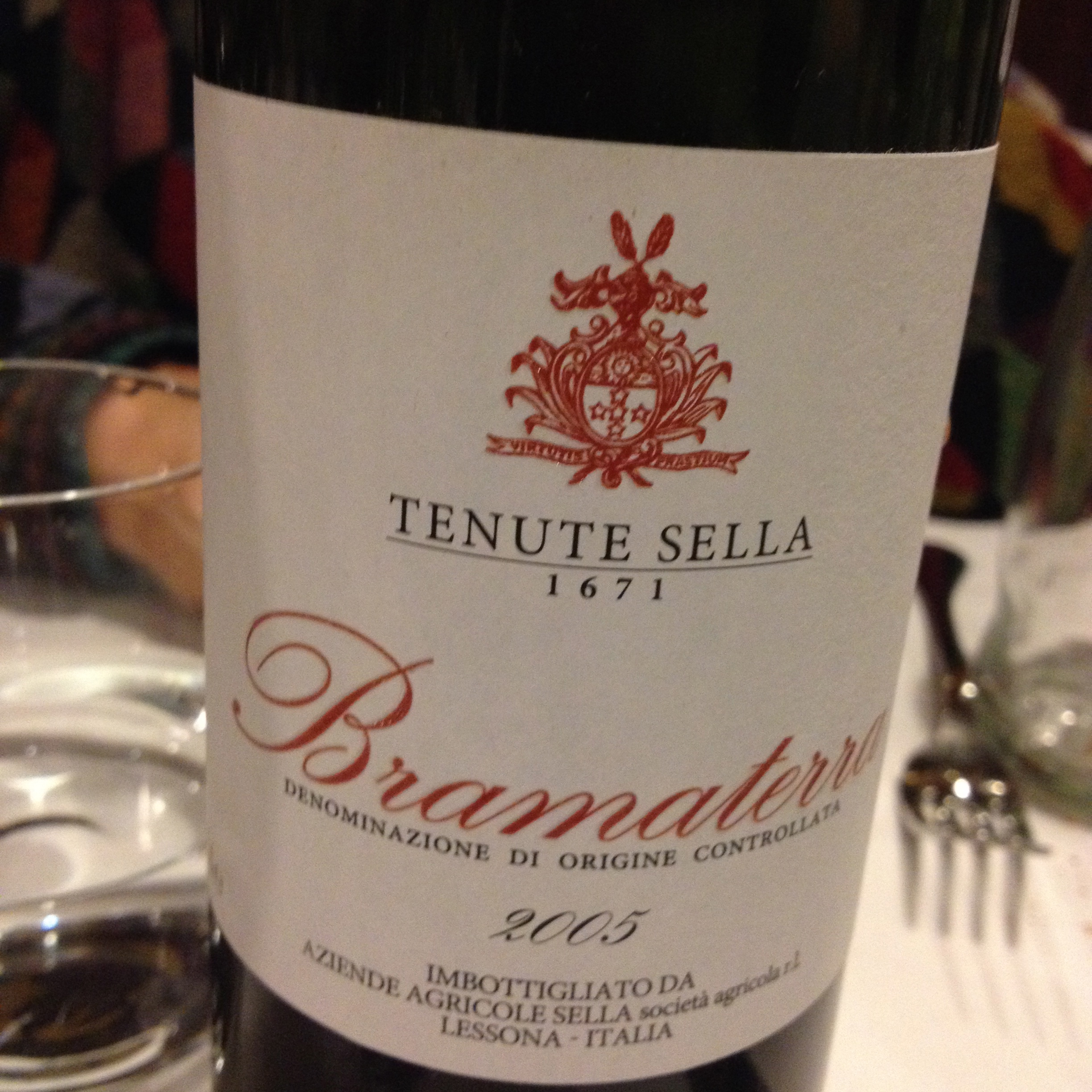
We drank a Bramaterra 2005 from Tenuta Sella made from 70% Nebbiolo, 20% Croatina and 10% Vespolina. The production area is in Northern Piedmont. The vines are 48 years old, the exposure is Southwest, the vineyard is at 300 to 350 meters the training system is guyot and the soil is volcanic in origin and reddish brown in color. Harvest takes place between September 22 and October 12. After the grapes are crushed, fermentation takes place in stainless steel tanks with pumping over and delestage. There is 30 days maceration for the Nebbiolo and 16 for the Croatina. The wine is aged in 10 hl Slavonian oak casks for 28 months. The wine was showing no signs of age. There were hints of faded roses, leather, blackberries and a hint of spice. The wine could age for another 10 years. It is an excellent buy.

Roscioli Salumeria Vineria con Cucina – Via dei Giubbonari 21-22. Roscioli is very difficult to describe because it is not only a restaurant but also a salumeria, a shop specializing in salumi and cheese, and a wine bar all at the same time,IMG_3237

It was opened in 2002 when Alessandro and Pierluigi Roscioli decided to make the change from the family grocery. They also have a bakery named Roscioli around the corner, with the best fig bread I have ever eaten. They also sell Roman style pizza by the slice. Michele likes the restaurant because it has one of the best spaghetti carbonaras in Rome.IMG_3270

We started with hand made Mortadella from Bologna garnished with crisp bread and 36 month aged Parmigiano Reggiano from red cows.IMG_7342

Then I had the water buffalo DOP mozzarella from Paestum served with Cantabrian anchovies and Taggiasche olives.IMG_7343

We both ordered La Carbonara: Spaghettone Pasta tossed with bits of crispy guanciale (pork cheeks), black pepper, Paolo Parisi eggs and Roman Pecorino DOP.IMG_7396

The wine was the 2012 Cerasuolo d’ Abruzzo (Rosè) made from100% Montepulciano d’Abruzzo from Eduardo Valentini. Aged in large botti of Slavonian oak for 12 months. There was just a touch of strawberry in the wine but that may be the only thing it has in common with other rose wines. I believe it is Italy’s best Rosè and it was less than 40 Euro in the restaurant. Eduardo passed away a few years ago but his son Francesco continues the tradition. IMG_7400

Taurasi Radici 1998 Riserva 100% Aglianico Mastroberadino The soil is poor in organic substances but with a high content of clay, limestone, minerals and microelements. The vineyards are on two hills, Mirabella vineyard at 500 meters and the Montemarano vineyard at 550 meters. Because of its position on the hill and its altitude, the temperature at the Montemarano vineyard is much colder and the grapes are picked a little later. Harvest is from the end of October into the beginning of November. The vinification is the classic one for red wine, long maceration with skin contact at controlled temperatures. The wine spends one year in Slovenian oak barrels and two years in bottle, the wine can be laid down for 10 to 15 years. The riserva stays in medium sized 40 to 50HL oak casks for 2 years and 2 years in bottle. It can live in the bottle for 25-40 years. This is the way I believe the 1998 was produced. The wine was showing no signs of age. This is a full, complex wine with hints of black cherry, plum, spice, smoke and a touch of leather.

Roscioli has a very good wine list and the wines are displayed on the walls of the restaurant.

IMG_7443

We were walking in the Piazza Navona and passed Tre Scalini, a café and restaurant famous for its Tartufo, chocolate covered chocolate gelato. The tartufo was created in 1946 by the head of the Ciampini family.IMG_7467

It has 13 varieties of Swiss chocolate and the exact recipe is still a secret. It has been a number of years since we had one so we decided to try it once again. The shape is different than I remember it, but it was just as good.

Leave a comment

Filed under Bramaterra, Cerasuolo d'Abruzzo, Enoteca Cavour 313, Italian Red Wine, Italian White Wine, Italian Wine, Mastroberardino, Roman Restaurants, Rome, Roscioli, Taurasi, Tenuta Sella, Tre Scalini Tartufo, Valentini

Classic Roman Restaurants

Michele and I rented a apartment in Rome for two weeks. It is in the Monti area which is very close to the Colosseum and the  Forum.

IMG_7354 The apartment we rented was  very comfortable, functional and a  good value for the money. Here is the link https://montihome.wordpress.com

As I have said many times before I love the food in Rome. This time we went back to some of our old favorite restaurants all of which are family run.

 Checchino dal 1887 (www.checchino1887.com, Via di Monte 31 Testaccio).

IMG_7458

Francesco and Elio

The Mariani Family has owned the restaurant since it opened in 1887. Francesco Mariani takes care of the front of the house while his brother Elio is in the kitchen.IMG_7460

Considering the wine and the food, it is the best restaurant in Rome with over six hundred wines from Italy and all over the world. The wine cellar is dug into Monte Testaccio, a hill made from broken amphorae which date back to Ancient Rome. The slaughter houses of Rome used to be located here and the restaurant still specializes in the so called quinto quarto, the fifth quarter, or innards and other spare parts.

I always have long conversations with Francesco about Italian wine and which one I should order with what I am eating. Francesco recommended a bottle of white to start.IMG_7450

Est, Est, Est di Montefiascone, Poggio Dei Gelsi 2013 Falesco Made from 50% Trebbiano, 30% Malvasia and 20% Roscetto. Riccardo Cotarella and his brother Renzo, the winemaker for Antinori, own the winery.

There is soft pressing of the grape-clusters. Vinification is in temperature controlled stainless steel tanks with selected indigenous yeasts. There is no skin contact and malolactic fermentation does not take place. Ciromaceration is used for the Roscello grapes. The wine is bottled early to keep its characteristic freshness and taste and it is aged in the bottle. This is an easy to drink wine with floral hints, fruity notes and good acidity.

Three great Bordeaux blends are produced within a short distance from Rome: Torre Ercolano, Colle Picchione and Fiorano. Older vintages of Torre Ercolano and Fiorano Rosso (made by the old Principe who stopped making wine in 1995) are no longer available. Two versions of Fiorano are now made by the old prince’s descendants, his cousin Principe Alessandro Jacopo Boncompagni Ludovisi, and another by his granddaughter, Alessia Antinori.IMG_7452

I asked Francesco if they had any older vintages of Colle Picchione. He said he would look and came back with a 1983. This was the last vintage before they singled out “Vigna dal Vassallo” as a cru.

Colle Picchione 1983, Paola di Mauro, made from Cabernet Sauvignon, Cabernet Franc and Merlot. The wine consultant at the time was the legendary Giorgio Grai. The wine consultant today is Riccardo Cotarella. The wines were aged in large oak barrels. I have visited the winery twice and both times drank the 1985 vintage. The 1983 had hints of leather and cherry with a very long finish and great aftertaste.IMG_7453

With the wines, we ate artichokes alla Romana, Coda alla Vaccinara, oxtail in tomato celery sauce with pine nuts, raisins and bitter chocolate, Bucatini all’Amatriciana and grilled baby lamb chops.IMG_7457

Torta stracciatella, a chocolate chip cake, was served with a glass of di Roscetto Passiro Felesco 2012 IGP Lazio Made from 100% Roscetto. This is a native variety from Lazio. The grapes are air dried in a special room to facilitate the development of Botrytis (noble rot).IMG_7456

The wine has nice fruit sensations on the nose, its taste is creamy, full bodied and harmonious with a long lingering finish with honey notes. It was a perfect combination with the torta.

Checchino is still a member of L’ Unione di Ristoranti del Buon Ricordo, a group of restaurants that give you a hand painted plate if you order their signature dish or tasting menu.

The first time I went to Il Matriciano (39-06-32500364) Via dei Gracchi, 55. The Calasanti family has owned and operated the restaurant since 1912. The present owners, a brother and sister, are always there. Alberto Calasanti is on the floor. He greets the guests and plates the food while his sister sits behind a counter and takes care of the checks. There is a nice outdoor space but of late we like to sit inside, which seems to be favored by the Romans. On Sunday afternoon and at night it is best to make a reservation.IMG_7469

As usual, I ordered zucchini flowers (I cannot get enough of them) and artichokes alla giudia to start. The flowers were perfectly deep fried with a small amount of mozzarella and more than a hint of anchovy stuffing.

IMG_7471 I ordered the bucatini alla matriciana.IMG_7475

Then I had abbacchio al forno, baby lamb roasted with potatoes and rosemary. It was cooked to perfection, moist with crisp skin.IMG_7477

For desert I had tiny fragoline, wild strawberries, and gelato.IMG_7473

We had a Pecorino 2014 IGP Terre di Chieti Cantina Tollo Abruzzo 100% Pecorino Fermentation takes place in stainless steel tanks at a controlled temperature. Malolatic fermentation does not take place. The wine has hints of white peach, a touch of spice, with good minerality and acidity.

Armando al Pantheon can be difficult to get into, so always book ahead. The restaurant was established in 1961 by Armando Gargioli. This time we went there twice, once on our own and another time with friends Ernie and Louise.IMG_7315

On the first visit I ordered the bruschetta, one with truffle and quail egg and the other with lardo and walnuts. Then I had bucatini alla matriciana and grilled lamb. The dessert was a strawberry crostata with a lattice top.IMG_7359

The next time we went, both Michele and I ordered the pasta with black truffles because we remembered how the aroma of the truffles filled the whole room on our previous visit. It was wonderful.

The Torta

The Torta

Michele also had Roman style chicken with peppers and we ended with their famous dessert, Torta Antica, made with ricotta.IMG_7316

By the way, she says that the artichoke alla Romana here is the best in Rome.IMG_7314

Both times we ordered 2011 Montepulciano D’Abruzzo, from Emidio Pepe.   It was less than 40 Euro–a real bargain in a restaurant. The wine was big but with a lot of fruit and not as tannic as I would have expected. Most of my experiences with Pepe’s wines are ones that are 25 years and older.

Trimming Artichokes at Da Giggetto

Trimming Artichokes at Da Giggetto

Da Giggetto (39- 066861 105) at Portico D’Ottavia 12 A, in the Jewish ghetto. The Ceccarelli family has owned the restaurant since 1923. We went here twice, once by ourselves and the second time with friends. IMG_7335

I do not need to look at the menu because I always order the same things: fiori di zucca ripieni con mozzarella e alici (small and crunchy but very good), carciofi alla giudia  (fried artichokes) and spaghetti con vongole veraci.IMG_7437

The clams were small and tender with just the right amount of parsley, garlic, olive oil and a hint of hot pepper. But since we went twice I also had the aliciotti fritti, fried anchovies, and the fava beans stewed with guanciale.

Fava Beans with Guanciale

Fava Beans with Guanciale

Michele also had fava beans with guanciale. We have been going here for many years and have never been disappointed.IMG_7434

We had the Bellone 2013 IGT Lazio “Castore,” I00% Bellone, Cincinnato. The Bellone grape may go back to ancient Roman times and is now grown mostly in vineyards around Rome. This is a fresh, fruity, easy to drink white wine that worked very well with the starters.IMG_7438

We also drank a Passerina Del Frusinate 2013 from Feudi Del Sole 100% Passerina. The winery is located a few kilometers from Rome in the Castelli Romani. It is a wine with hints of apples and white preachers, good acidity and a long finish and nice aftertaste.


11 Comments

Filed under Armando al Pantheon, Checchino dal 1887, Cincinnato winery, Colle Picchioni, Da Giggetto, Falesco Winery, Feudi Del Sole winery, Il Matriciano, Italian Red Wine, Italian White Wine, Pecorino, Roman Restaurants, Rome

Meeting Alessandro Rivetto

Alessando Rivetto

I will not even look at Barolo and Barbaresco until they are 10 years old. I look at them but put them aside to age for at least another 5 to 10 years. That’s why I like to buy older Barolos and Barbarescos — so I will not have to wait too long to drink them.

Franco Bengazi, owner of the Wine Emporium, an importer and distributor of mostly Italian wine, told me he had a friend who had older vintages of Barolo and Barbaresco to sell.IMG_2005

I went to visit his friend.  He had Barolo and Barbaresco from the 1960’s and ’70’s, stored in cardboard cases that fell apart when we tried to open them.  The wines were from the Rivetto winery and I bought a number of them.

IMG_7231

Alessandro Rivetto

Though we had never met in person, Alessandro Rivetto is my Facebook friend.  When he saw on Facebook my pictures of the Rivetto wines from his families winery, he wrote to me and said that next time he was in NYC we should get together.  I said I would open some of the older vintages for him.

That was a few years ago and a number of things have changed since then.  I drank all of the wines I had bought and Alessandro left his family’s winery and went out on his own. He inherited part of the family vineyards and now has three partners.  Alessandro produces two different lines of wine, the Alessandro Rivetto line and the Ipoli line.  His original family winery is still in business under the name of Rivetto.

Lorenzo Baricca, wine director of Tarallucci E Vino Restaurant in NYC knew of my interest in these wines and my contact with Alessandro.  When he scheduled a dinner featuring Alessandro’s wines, Lorenzo invited me to join them and I met Alessandro at last. We tasted the wines from the Alessandro Rivetto line.

IMG_7222

Langhe Arneis “ Matire”2013 DOC 100% Arneis

The harvest is manual. The must and the skins are in contact at cold temperatures for about 30 hours after which the fermentation takes place in temperature controlled stainless steel tanks. Maceration lasts for five days. The wine is aged in stainless steel. This is an Arneis with some body, fruity with hints of citrus and good acidity.IMG_7224

Barbaresco 2010 DOCG made from 100% Nebbiolo. Manual harvest. Stemmer pressing and cold maceration for 2 days after which fermentation takes place in temperature controlled stainless steel tanks. Maceration lasts for 20 days. The wine remains in oak casks for 18 months and in bottle for 6 months before release. This is a balanced wine has hints of cherries and violets with touches of tea and rose petals.IMG_7226

Barolo Serralunga d’Alba 2009 DOCG made from 100% Nebbiolo. Manual harvest. There is stemmer pressing and cold maceration for 2 days. Fermentation takes place in temperature controlled stainless steel tanks. Maceration lasts for 20 days. The wine is aged for more than 3 years in oak casks. The wine remains in the bottle for 10 months before release. It is a wine with hints of blackberries and violets with a touch of tea and spice. IMG_7235

Barolo “Lazzarito”2009 DOCG 100% Nebbiolo Manual harvest then stemmer crushing and maceration. Fermentation is in temperature controlled stainless tanks. The maceration lasts for 37/42 days. Aging is in oak casks for more then 3 years and in bottle for 18 months before release. This is a wine with hints of leather, spice, licorice and a very long finish. It is a Barolo that will age for many years.

The executive chef at Tarallucci E Vino, Andrew Welch, did a great job of matching the food with the wines.


2 Comments

Filed under Alessandro Rivetto, Arneis, Barbaresco, Barolo, Italian Red Wine, Italian White Wine, Italian Wine

Vino 2015 in NYC: Some New Discoveries and Some Old Friends

Last week the Italian Trade Commission welcomed wine journalists and members of the trade to VINO 2015, Italian Wine Week. It was billed as the Greatest Italian Wine Event Held Outside Italy: Celebrating the Wines of Southern Italy. There were a number of seminars on Italian wine and other events and a Grand Tasting.

Slow Food/Wine which has a Slow Wine Guide of the 400 best wineries in Italy was also holding a Grand Tasting billed as Slow Wine/Vino 2015. Both Grand Tastings took place over a two-day period at the Waldorf Astoria.

At the Grand Tastings there was an ocean of wine but I did my best to taste as many as I could. There were a number of new discoveries and many old friends.

The Wines.

Filippo Antonelli (Umbria) one of my favorite producers of Sagrantino di Montefalco. I always enjoy speaking to him and tasting his wines. His also produces a white wine that I had not tasted before:IMG_7149

Trebbiano Spoletino, made from 100% Trebbiano Spoletino (a white grape variety native to the area around Spoleto). A hand selection of the best grapes in the vineyard which is at 300 meters with a western exposure. Filippo cultivates the vines as they did in ancient times next to maple trees in order to make the grapes grow higher. The vines are attached to the trees keeping them well off the ground so that the late frost in the region does not affect them. The harvest takes place in October.

Soft pressing is followed by skin contact and cold static clarification. Fermentation is in 25 HL oak barrels. Aging in 25 HL oak barrels and 3 months in bottle before release. The wine has floral aromas with hints of tropical fruit, almonds and spice. It is well balanced with good acidity.

Colutta from Friuli is a producer I do not know so I decided to taste his wines. Giorgio Colutta was there and he told me about his wines and winery. He makes a number of wines including a Sparkling Brut from the Ribolla Gialla grape. I liked the whole line. The Refosco was one of the best I ever tasted.IMG_7107

Refosco made from 100% Refosco del Peduncolo (Red Stalk). There are 3,000 vines per hectare. The grapes are hand harvested, destemmed, crushed and fermented at a controlled temperature in stainless steel tanks with additional selected yeasts. Déslestage (rack and return) takes place. After 10 to 15 days the grapes are soft pressed. Part of the wine is aged in barrels and part in stainless steel. This is a wine that needs time. It has hints of wild blackberry, plum and other black fruits.

I have always been a big fan of Badia a Coltibuono Chianti Classico. Emanuela Stucchi Prinetti was there and she told me I have to taste this wine made from very traditional Tuscan varieties.IMG_7140

Chianti Classico “Cultus Boni” 2010 made from 80% Sangiovese, Colorino, Ciliegiolo, Fogliatonda, Malvasia, Sanforte, Mommolo and Pugnitello. The geographical area is Monti in Chianti and the vineyards of Montebello and Argenina. The vineyards are at 260 to 370 mt. and the exposure is south, southwest. Soil is clay and limestone, vines are 10 to 35 years old, and training system is guyot. Manual harvest. Natural fermentation takes place with native yeasts, maceration for about 40 days on the skins. Aging is in French Oak barrels of various sizes. This is a full-bodied wine with red fruit aromas and flavors and hints of cherry and violets.IMG_7108

A friend asked me to taste the wines of a Sicilian producer and then give my opinion of the wines. The producer is Alliata and I told him that I liked the wines after tasting them. They make wines from the Insolia, Grillo and Nero d’Avola among others. The Insolia is made from 100% Insolia in northwest Sicily. The soil is clay and pebbles and the vineyard is at 200 to 250 meters. There are 5,000 vines/ha and they use a vertical trellised training system. Harvest takes place the first two weeks of September depending on the maturity of the grapes. Extremely soft pressing takes place with a membrane press at a controlled temperature in stainless steel tanks. The wine ages for 4 to 5 months in stainless steel tanks on the lees. It is released after 2 to 3 months in bottle.IMG_7101

Brunello di Montalcino DOCG Riserva “Poggio all’Ora” 2009. Castello Banfi. Made from 100% Sangiovese, estate selection. The Poggio all’Ora vineyard is on the southern slopes of the Montalcino hillside at 250mt. The wine is produced only in excellent vintages based on a meticulous selection of the harvested grapes. Temperature controlled vinification is in Horizon hybrid stainless steel and wood tanks with skin contact for 12 to 14 days. Aged in barriques for 30 months, and at least 12 to 18 months in bottle. The wine is kept for a total of five years before release. This is a wine with notes of violet and hints of plum, jam and a touch of coffee. I was very impressed by this wine and even though it spends a long time in barriques, the usual tastes associated with these barrels was not present. IMG_7117

Taurasi “Campoceraso” 2007 DOCG Azienda Vinicola Struzziero Avellino, Campania. 100% Aglianico. I had not tasted wine from this producer in some time so I stopped to see if they were as good as I remember them. The vineyards are on the Colline Venticano hills and Torre Le Nocelle. There is controlled fermentation with 25 days of maceration. The wine is aged in oak barrels for at least 36 months. The wine remains in bottle for about six months. This is a wine that can age. It has hints of red fruit, spice, coffee and tobacco. It is a balanced wine with a full aftertaste and long finish. I was happy to see that the wines were as good as I remember them.

Planeta – The winery has different locations around Sicily and I have visited most of them. This wine comes from the Feudo di Mezzo location close to Mt Etna.IMG_7152

Eruzione 1614 Bianco DOC  vintage 2013 made from 95% Carricante and 5% Riesling grapes from the Sciara Nova vineyard in Castiglione, Sicily. The soil is black lava (Mt. Etna) and the training system is vertical trellis, spurred pruned cordon and guyot. There are 5,000 wines per hectare and the harvest takes place on October 6th. Grapes are picked and refrigerated at once at 8 degrees and a hand selection takes place. After a light crushing and destemming the grapes are soft pressed. The decanted must is racked and inoculated with yeast, then fermented at 15 degrees for 20 days. The wine remains on the lees until February with continuous mixing and is bottled in March. This is a white wine that will age and should not be drunk until at least 3 years after the vintage.


Leave a comment

Filed under Alliata Winery, Antonelli, Banfi Brunello, Colutta Winery, Cultus Boni Chianti Classico, Eruzione 1614 Bianco, Insolia, Italian Red Wine, Italian White Wine, Italian Wine, Planeta, Poggio Alle Mura- Castello Banfi, Refosco, Struzziero winery, Taurasi, Trebbiano Spoletino

Celebrating “La Befana”

From beginning to end, it was a wonderful holiday season with good food, good wine and most of all good friends. January 6 marked the end of the season. Though it is not celebrated much here, in Italy it is the feast of the Epiphany, when good Italian boys and girls receive gifts delivered by the Befana, a good witch.IMG_6850

This year, we celebrated at the home of wine and food writers Tom Maresca and Diane Darrow. It was our third annual Befana celebration, a tradition begun by Lars Leicht, National Director of Cru Artisan Wines for Banfi. When Lars was young, he spent the summer and many holidays with his family in Anagni, a small town not far from Rome and became familiar with the Italian customs and traditions.

The evening began, as always, with Champagne.IMG_6844

Champagne Brut Andrè Clouet Rose No 3 Bouzy 100% Pinot Noir fermented as blanc Champagne blended with 8% still Bouzy Rouge.

The Clout family owns 8 hectares of vines in preferred mid-slope vineyards in Grand Crus Bouzy and Ambonnay where they have excelled as Pinot Noir specialists. The wines are cellared under the family’s 17th century village house – built by an ancestor who acted as printer to Louis XV’s royal court at Versailles! Respect for terroir is evident in these traditionally crafted wines. The labels are attractively old-fashioned in design appropriate for the descendants of a notable printer. This is a fragrant, round rosé with fine bubbles and ripe, full fruit flavors of Pinot Noir interwoven with drier, toasty complexity; excellent deep color; with hints of strawberry, raspberry and almonds.

With the Champagne we ate baked Italian sausages with sweet and sour figs, a delicious recipe adapted from a cookbook by Penelope Casas. It was an interesting combination and went very well with the Champagne.IMG_6845

Luna Mater Frascati Superiore DOC 2011, Fontana Candida Made from 50% Malvasia di Candia, 30% Malvasia del Lazio, 10% Greco and 10% Bombino. Harvesting began in the final 10 days of September and continued until the end of October, producing perfectly ripe, healthy grapes with a golden color and high sugar content. The grapes are grown in selected hillside vineyards ranging between 650 and 1,300 feet in the communes of Frascati and Monteporzio Catone.  The volcanic soil is loose, porous and dry but not arid. Spalliera, Guyot and Cordone Speronato training systems are used. First selected bunches of mature grapes are picked by hand. Then the best grapes from each bunch are chosen.  The grapes are transported in small baskets directly to the cellar so that they will be in perfect condition when they arrive.

The vinification of the grapes for the Luna Mater is a process that they invented and takes place in three different stages. In the cellar the grapes are separated into two batches. This is called the “modern” stage. The first batch is cooled immediately prior to a gentle pressing to ensure maximum aromatic qualities. The second batch is destemmed, cooled and fermented in contact with the skins to produce a marked varietal character. This is done without oxygen to keep the grapes fresh. After 6-7 days the skins were removed, any longer than this and there would be too much extract.

Three days later a small quantity of the best grapes are destemmed by hand and added whole to the fermenting must with their own natural yeast for bouquet and flavor. The berries remain in the must until the end of February.  The alcohol helps extract tannin from the skins and pits. The wine is aged in 10HL acacia wood barrels, which may be the best wood for the Malvasia grapes. The barrels are not toasted and were steam folded. Mauro Merz, the wine maker, feels that barriques do not give him the type of wine he wants to produce and they are not traditional.  The wine is left to age in bottles laid horizontally in the ancient tufa tunnels under the Frascati hillsides.

Luna Mater means Mother Moon; it reflects the wine’s close ties to nature and the 50 old vines that are used to make this wine. It has floral aromas with hints of white peach and honey with bitter almond in the finish and a very pleasing aftertaste.

Seafood Salade

Seafood Salad

This was served with a mixed seafood salad perfectly prepared by Tom Maresca. It was a great match.

Torre Ercolana 2000 Cantina Colacicchi – (Anagni) Cabernet Sauvignon, Merlot and Cesanese di Piglio.IMG_6846

The wine is made by a natural fermentation, no filtration, sterilization or pasteurization. The wine is aged in barrel with four rackings a year. I have been drinking the older vintage of this wine for a number of years and buy them in Rome at Trimani, a wine store (and wine bar) with an excellent selection. They have exclusive rights to the wine. It is not available in the U.S. and it difficult to find outside Rome. The wine does not always taste the same because the blend changes according to the vintage. In hot vintages the Cesanese does better so there is more of it in the blend. In cooler vintages the Cabernet Sauvignon and Merlot does better so their percentage is increased. The best however is when all three varieties ripen perfectly.

IMG_6855

Timballo

Burton Anderson, in his book VINO, describes the wine in musical terms. “My first mouthful of Torre Ercolana was like my first earful of Beethoven’s Fifth: so overpowering it left me gasping for adjectives to describe it.”  It has hints leather, spice, red fruit, a nice long smooth finish and great aftertaste.

Lars Leicht’s family is from Anagni where this wine comes from. He told us a story about visiting the winery when he was young. Lars made his famous timballo that he remembers his family making on the holidays. It is made with fresh pasta layered with tomato sauce, ham, hard cooked eggs and cheese, similar to lasagna, though much more delicate. I brought the Torre Ercolana thinking it would go perfectly with the timballo and it did.IMG_6847

 Flaccianello Della Pieve 1999 Tuscan Colli Centrale IGT 100% Sangiovese Fontodi. In magnum The oenologist is Franco Bernabei. There are 6,000 vines per hectare and the training system is guyot. Fermentation takes place in temperature controlled stainless steel tanks, with the addition of indigenous yeast for at least 3 weeks. The 1999 was aged in French oak barrels for 12 months. Today maceration is in new Troncais and Allier French oak barrels for at least 18 months. It has hints of blackberries, spice, tobacco and blueberries. There was not even a hint of oak or vanilla. Flaccianello is one of the few Super Tuscans that I can drink and enjoy.

The Ham

The Ham

This was served with roasted fresh ham (porchetta), potatoes, pears and peas.

 Recioto Soave Classico 2007 “Le Colombare” 100% Garganega ( Veneto) PieropanIMG_6848

Certified Organic. Volcanic soil, rich in basalt and tuffo Eocene. The vineyards are at 300m and the exposure is west. The training system is Pergola Veronese and there are 4,000 vines per hectare. There is a manual harvest with careful selection of ripe grapes. All the grapes are collected in small boxes and brought to the winery for the drying process. The grapes are manually placed in a loft on mats made of bamboo reeds. The drying is natural and the grapes remain until they wither which is around the end of February. The natural climate conditions allow for berry dehydration, loss of water and the development of noble rot (Botrytis). The yield of juice is very low and the grapes lose 1/4 of their original weight. The wine is only produced in good vintages. Destemming and pressing of the grapes takes place. There is a selection of the must and fermentation at a controlled temperature 14 to 16 degrees C in barrels of 2,500 liters. The residual sugar is 110 to 120 g/L. The wine is aged in oak barrels of 200 liters for about two years and in glass for 6 months before release. This is a dessert wine with ripe fruit, hints of apricot and quince with a very long finish taste and nice aftertaste.IMG_6863

Michele made an Upside Down Meyer Lemon Cake which she adapted from the clementine cake her new book “The Italian Vegetable Cookbook”. The citrus flavor of the cake enhanced the flavors of the dessert wine.

For more information about the dinner, see Diane’s blog

https://dianescookbooks.wordpress.com/2015/01/07/a-feast-for-la-befana/

3 Comments

Filed under Andre Clouet champagne, Champagne, Flaccianello, Fontana Candida, Italian Red Wine, Italian White Wine, Italian Wine, Luna Mater, Pieropan-La Colombare, Recioto, Recioto di Soave, Torre Ercolana

Discovering Tuscany’s Hidden Gem: Morellino di Scansano

.

Morellino di Scansano is a wine that does not get the recognition that it deserves. Often overlooked because of the popularity of other wines from Tuscany, Morellino di Scansano like those, is based on the Sangiovese grape but is a much better value for the money.IMG_6407

A tasting and lunch of Morellino di Scansano wines was held at Eataly in NYC.

Giacomo Pondini, director of the Consortium Tutela Morellino di Scansano, spoke about the wine. He said that the production zone is the predominantly hill area around the village of Scansano in the Maremma region of costal Tuscany between the Ombrone and Albegna Rivers. Altitude ranges from just a few meters above sea level near Grosetto to 550 meters in the Collecchio zone. The Morellino di Scansano zone covers approximately 65,000 hectares of land in the southwest of the province of Grosetto, the southernmost area of Tuscany. There are about 1,500 hectares of vineyards.

Giacomo Pondini

Giacomo Pondini

Morellino di Scansano DOCG, including the Riserva, must be at least 85% Sangiovese. Vineyards cannot have a density of less that 4,000 vines per hectare. Only emergency irrigation is allowed. The natural minimum alcohol must be 12% for both the regular and riserva

The riserva must be aged for at least two years, one of which must be in wooden barrels. Aging period is calculated from January 1st after the harvest.

The regular can be released for sale starting on March 1st of the year after the harvest. Vinification, aging and bottling must take place within the production zone.

He added that because of its location the wine is softer and rounder than in other parts of Tuscany. He also felt that there was a movement in the zone away from the use of international grapes and barriques.


The WinesIMG_6410

Morellino di Scansano “Torre del Moro” 2013 DOCG Santa Lucia made from 100% Sangiovese. The vineyards are on low hills, facing southwest and the soil is of medium texture, calcareous and stony. Harvest takes place the second or third week of September by hand. Traditional vinification in temperature controlled tanks of limited volume. The grapes are left to macerate for a period of 20 days. After malolatic fermentation the wine ages for four months in barrels. The wine is bottled at the end of the summer following the harvest. The wine remains in the bottle for a minimum of 180 days before release. This is a light, fruity, easy to drink wine that goes well with food.IMG_6400

Morellino di Scansano 2013 DOCG Fattoria Barbi (Vivaio dei Barbi) made from 85% Sangiovese Grosso and 15% Merlot. This is a 28 hectare property of which 20 hectares is planted with vines, 16 hectares of Sangiovese and four hectares of Merlot. The estate is on a hill at 250 meters. The soil is stone mixed with sand. Sangiovese from the Maremma, locally known as Morellino, has softer tannins and lower acidity levels than Sangiovese from other parts of Tuscany. There is s pre-fermentation cold maceration (cold soak), which consists of cooling the grapes at a temperature of 60°F in an anaerobic environment (under CO2) to protect the must from oxidation. After 48 hours, the temperature is raised and alcoholic fermentation begins, and lasts 12 to 13 days. After racking and malolactic fermentation, the wine is aged in small and medium oak barrels 222L to 15HL for six months. The wine has hints of red berries, cherries, a touch of tobacco and good acidity.IMG_6404

Morellino di Scansano “Spiaggiole” 2012 DOCG Poggio Maestrino made from 100% Sangiovese from the Spiaggiole and Poggio Mastrino vineyards. The vines are 10 years old and the exposure is east-west. There are 5,000 plants per hectare. For pruning they use the runner system (cordone speronato) and the soil is medium type of volcanic origin. The wine is fermented in temperature controlled stainless steel tanks. Malolactic fermentation also takes place in stainless steel tanks. The wine is aged in steel tanks and in the bottle for six months before release. It is fruity with hints of cherry, well balanced and a nice long finish.IMG_6402

Morellino di Scansano “Capatosta” 2011 DOCG Poggio Argentiera made from 85% Sangiovese, 10% Ciliegiolo and 5% Allicante. Representing the winery was Giampaolo Paglia, the owner/winemaker. He said the winery was established in 1997 and they had 6 hectares of old and high quality producing vineyards. They planted new vineyards of local varieties such as Sangiovese and Alicante. He said he makes wines that have a sense of place, where the terroir is allowed to show itself unbiased. Starting in 2009 they began organic farming and follow a very natural and non- intervention approach in the cellar.

Giampaolo Paglia

Giampaolo Paglia

Most of the wines are not filtered or fined. No additives or chemicals are added with the exception of a small amount of sulfites. For the Sangiovese based wines only medium to large oak barrels are used. The wines are made to be drunk young and are aged in stainless steel or cement vats. He also said that as of 2009 they stopped using barriques because they were too aggressive for the Morellino . He ended by saying that Maremmano wines can be Mediterranean without being jammy and impenetrable; Sangiovese speaks a different language on the coast than in inland Tuscany and does not have to affect a thick, heavy accent to enhance this difference. This was my favorite wine at the tasting IMG_6403

Morellino di Scansano “Reviresco” 2012 DOCG Val di Toro made from 100% Sangiovese the grapes are hand harvested and sorted in mid September. The training system is Guyot and there are 6,000 vines per hectare. After destemming, the must ferments in temperature controlled vats, starting at 18°C then gradually rising to 28°C toward the end of the fermentation process. During maceration, which lasts about 20 days, pump over’s are carried out daily and towards the end of the period a short delestage (rack and return). Malolactic is in cement vats, and the wine is transferred into second passage tonneaux of French oak, where it remains for about 10 months. The wine has aromas and flavors of fresh fruit with hints of wild berries and cherries.IMG_6405

Morellino di Scansano “Nero” 2012 DOCG Fattoria Villa Acquavita made from 85% Sangiovese, 15% Malvasia Nera and Alicante. The vines are 330 meters above sea level. Skin contact lasts for at least 10 days. Fermentation takes place for 10 days. The wine is aged in 5.5HL barrels. This is very traditionally made wine with hints of berries, cherries and other red fruits.IMG_6401

Morellino di Scansano “I Massi” 2012 DOCG Conte Ferdinando Guicciardini Massi di Mandorlaia made from 85% Sangiovese and 15% Merlot, Cabernet Sauvignon and Alicante. The wine is fermented in stainless steel with 15 to18 days maceration. The wine is aged for 8 to 10 months in vats and partly in French oak barrels. The wine is aged in bottle for 4 to 6 months before release. This is a well-balanced wine with good fruit, a hint of spice and balsamic with a long finish and pleasant after taste. This was also one of my favorites.

These wines are a real bargain at $20 or less.


5 Comments

Filed under Fattoria Dei Barbi, Fattoria Villa Acquaviva Nero, I Massi Morellino, Italian Red Wine, Italian Wine, Morellino di Scansano, Poggio Argentiera Capatosta, Poggio Maestrino Spiaggiole, Santa Luca - Torre del Moro, Val di Torre Reviesco

A Non-Traditional Thanksgiving

Our Thanksgiving menu was an unorthodox one this year, but we started as always with Champagne.IMG_6593

Champagne Delamotte Brut NV made from 50% Pinot Noir, 30% Pinot Nero and 20% Pinot Meunier. The wine is light and fresh with citrus aromas and flavors and good acidity. The sister house is Salon and both are part of the Laurent-Perrier group. At about $38 a bottle, it is a bargain and is our current house champagne.IMG_6594

Blanc de Blancs Brut “Amour de Deutz” Millesime 2002 William Deutz made from 100% Chardonnay from their own Grand Cru villages of Avize and Le Mesnil-sur-Oger in magnum. This is one of the most complex and elegant champagnes that I have ever tasted. It comes in a clear bottle and 2002 was an excellent vintage. With the Champagne we had olives, cheese wafers, and pears wrapped in prosciutto.IMG_6596

Auxey-Duresses 2001 Lalou Bize-Leroy made from 100% Chardonnay. Biodynamic farming is practiced. A careful selection of hand picked grapes is brought to the cave in small baskets in refrigerated trucks. The grapes are carefully sorted on two large sorting tables (not moving conveyor belts). Only the best grapes are chosen. Fermentation is in large wooden oak barrels without any de-stemming or crushing to avoid any oxidation and to preserve the native yeasts, which are present on the skins of the grapes. Pigeage–crushing down the cap–and remontage–removing the fermented juices from under the cap and bringing it on top of the cap–takes place followed by slow fermentation and a long maceration. After pressing the wine goes down to the first underground cellar. It stays here until the end of malolactic fermentation. After pouring the juice off the lees–soutirage a la sapine--no pumps are used only gravity. The wine then goes down to a second, deeper cellar. It stays there until it is bottled. This wine was showing very well with good citrus aromas and flavors.IMG_6590

We go to restaurant SD26 often and really like their signature dish, Uovo in Raviolo, a large raviolo filled with ricotta and a soft cooked egg yolk, topped with truffle butter. Michele said she would like to do this dish for our guests on Thanksgiving. She made the pasta for the ravioli by hand, IMG_2731and instead of truffle butter she used Kerrygold butter, a favorite brand. I bought a beautiful fresh white truffle to shave on top.  The warmth of the raviolo and hot butter brought out all the aroma and flavor of the white truffle IMG_6597

Dolcetto D’Alba “Boschi di Berri” 1988 Poderi Marcarini made from 100% Dolcetto from pre-phylloxera vines. The vineyard is over 100 years old and because the soil is sandy and the particular microclimate of the vineyard, the vines are phylloxera free. They are not spliced onto American rootstock but are native vines. The vineyard is 0.5 hectares; there are 4,400 vines per hectare. The training system is free-standing espalier with guyot pruning and the exposure is west. The vineyard was planted in the late 1800’s. This was an exceptional wine, showing no sign of age. It had hints of cherries, raspberries, currants and a touch of leather. It was unlike any Dolcetto that I have tasted before. If this was the traditional Dolcetto from the last century, we are missing a lot today!IMG_2737_2

The main course was a bone-in pork rib roast with cranberry fig mostarda, a recipe from Michele’s latest book, The Italian Vegetable Cookbook. With that we had roasted potatoes and Brussels sprouts baked with butter and Parmigiano Reggiano.IMG_6598

Barbaresco Riserva “Ovello” 1979 made from 100% Nebbiolo Produttori del Barbaresco.  Produttori del Barbaresco is a wine cooperative, arguably the best in Italy. It has roots going back to 1894 when there were 19 members, but the co-op as we now know it dates from1958.  Today there are 56 members. Over the years, a few members have left the co-op to go out on their own.

Produttori has 100 hectares of Nebbiolo in the Barbaresco Appellation, 1/6 of the area. Each grower makes his own decisions as far as growing the grapes is concerned. Produttori del Barbaresco only produces wine from the Nebbiolo grape — Barbaresco DOCG, a blend of grapes from different vineyards, and Langhe Nebbiolo DOC.

In great vintages, nine single vineyard Barbarescos are produced within the boundaries of the village of Barbaresco: Asilli, Rabaja, Pora, Montestefano, Orvello, Pagé, Montefico, Moccagatta and Rio Sordo.  The co-op takes great pride in these wines and the name of the single vineyard, the total number of bottles produced, and the name of the owners of the vineyard are on the label.

The Orvello vineyard covers an area of 16.25 acres at 290 meters with a south/southeastern exposure. The 1979 was aged in large barrels of Slavonic oak for four years. This is traditional classic Barbaresco at its best. I have been drinking these wines for over 35 years.IMG_6600

Barolo Riserva 1971 Giacomo Borgogno and Figli 100% Nebbiolo. The grapes come from three different cru vineyards: Cannubi, Liste and Fossati. The winery is located in the center of the town of Barolo. The wine is aged at least five years in large oak barrels. This is a wine produced with traditional and natural wine making methods. Long fermentation and pumping over by hand takes place. Today the Farinetti family that also owns Eataly owns the winery. I have always had very good luck with older vintages of Borgogno. This is a classic traditional Barolo.

We finished the red wine with the cheese course.IMG_6603

Fiano Passito “Privilegio 2011 Irpinia DOC Feudi di San Gregorio made from Fiano and Falangina grapes, harvested by hand, late harvest with a touch of Botrytis (noble rot) in mid October. The vines are 15 to 20 years old, there are 4,000 to 4,500 vines per hectare and the vineyards are at 1,000 to 1,500 ft. The grapes are then dried on straw mats for several months. After a soft pressing, the clarified must is fermented in new French Troncais oak barrels. The wine has hints of honey, figs, apricot and pear and was a perfect combination with the pumpkin pie and apple crisp we had for desert.IMG_6592

After the cafè we toasted the holiday and our guests with Romano Levi Grappa.

Leave a comment

Filed under Amour de Deutz, Auxey-Duresses-Bize-leroy, Barbaresco, Barolo, Borgogno, Boschi di Berri, Champagne, Delamotte NV, Dolcetto, Feudi di San Gregorio, French White Wine, Italian Red Wine, Italian Wine, Marcarini Winery, Produttori del Barbaresco

First Look Series: The Barollo Brothers

Gary Grunner of Grapes on the Go invited me to the first event of his First Look Series. Held at the Manhattan Club, a private club in NYC, the First Look Series features wineries that Gary will be importing over the next year.

Barollo Brothers, Nicola and Marco

Barollo Brothers, Nicola and Marco

The wines for this first event were from the Società Agricola Barollo Marco e Nicola. Marco Barollo represented the winery. The winery is located in Preganziol, near Treviso in the Veneto. It is near the Adriatic Sea and the Dolomites are visible in the background.

Marco Barollo speaking at the tasting

Marco Barollo speaking at the tasting

Marco said that 45 hectares are planted with vines.The grapes are harvested by hand and it takes about 20 workers to pick the grapes from one hectare of vines in a day. The wine presses are located near the vineyards so that the grapes remain intact right up to the time they are pressed.

Marco said that his wines reflect the terroir and the grapes that they are made from and therefore go very well with food. All the wines are fermented in 300HL stainless steel tanks. There was only one wine that was in barriques which were made of Allier oak by a barrel maker in Burgundy.

The goal of the winery is to reduce their ecological footprint and CO2 emissions.IMG_6389

Sauvignon Blanc 2013 100% Sauvignon Blanc. There are 5,080 vines per hectare, the grapes are hand harvested. Soft pressing, settling, traditional fermentation in temperature controlled stainless steel tanks. Three months in bottle before release. This is a subtle Sauvignon Blanc, with nuances of grapefruit, lime, current, citrus and herbal notes of grass and minerals. A slight trace of tomato leaf can be found in the finish. The wine was served with cold poached shrimp, yellow squash, baby kale, tomato confit and champagne vinaigrette. The wine and food matched very well, especially since kale can be very hard to match.IMG_6395

Pinot Bianco 2012 100% Pinot Bianco. The training system is spurred cordon and there are 3,000 vines per hectare. Harvest takes place in early September. Soft pressing takes place, settling and traditional fermentation in temperature controlled stainless steel vats with daily batonnage. The wine remains in contact with the lees for an extended period of time. The wine is aged for 6 months in stainless steel and 6 months in bottle before release. This wine is fresh and elegant with a pale yellow color. The bouquet is fruity, with a dominant note of apple and tropical fruit. It has good acidity, a mineral character and a long-lasting finish. This was served with pumpkin risotto drizzled with pumpkinseed oil. $18 IMG_6394

Manzoni Bianco 2012 100% Manzoni Bianco. There are 5,000 vines per hectare and the harvest takes place in the middle of September. There is a soft pressing of the grapes, part is fermented in temperature controlled stainless steel tanks and part is barrel fermented with daily batonnage. The wine is in bottle for 6 months before release. Marco said that this white wine is the exact replica of one of the most famous wines created and developed by Professor Luigi Manzoni, Dean of the Winemaking School in Conegliano. Manzoni conducted a series of experiments in the 1930s on genetic improvements to the grape through crossbreeding and hybridization. Manzoni Bianco, an indigenous grape from the province of Treviso, was created by the genetic crossbreeding of Riesling Renano and Pinot Bianco.

The wine has a golden yellow colour; it is fruity with floral notes and hints of apple with good acidity and a pleasant minerality. This was also served with the risotto and it worked very well with it but I gave a slight nod to the Pinot Bianco. $19

Frater Red 2013 100% Merlot (Frater means brother in Latin) The training system is spurred cordon, there are 3,700 vines per hectare and the grapes are hand harvested the last week of September. Maceration and fermentation lasts for 12 days in temperature controlled steel vats with daily pumping over, devatting and malolactic fermentation taking place. The wine is in bottle for 3 months before release. This is a balanced well-structured wine, with hints of ripe red cherries, a touch of spice and a nice fruity finish and aftertaste. This was served with grilled hanger steak caramelizes onion and oxtail marmalade. $17 IMG_6384

Frank 2010 100% Cabernet Franc There are 5,100 plants per hectare and the grapes are hand harvested the last week of September. Maceration and fermentation lasts for 15 days with daily pumping over, devatting and malolactic fermentation taking place. The wine is aged for 12 months in barriques, of Allier oak, 1/2 new and 1/2 second passage and in bottle for 6 months before release.
This wine is made with grapes from some of the world’s oldest vineyards. This is an elegant well-balanced wine with hints of ripe berries, coffee and a touch of tobacco. It has a very long finish. This was also served with the hanger steak. $30IMG_6393

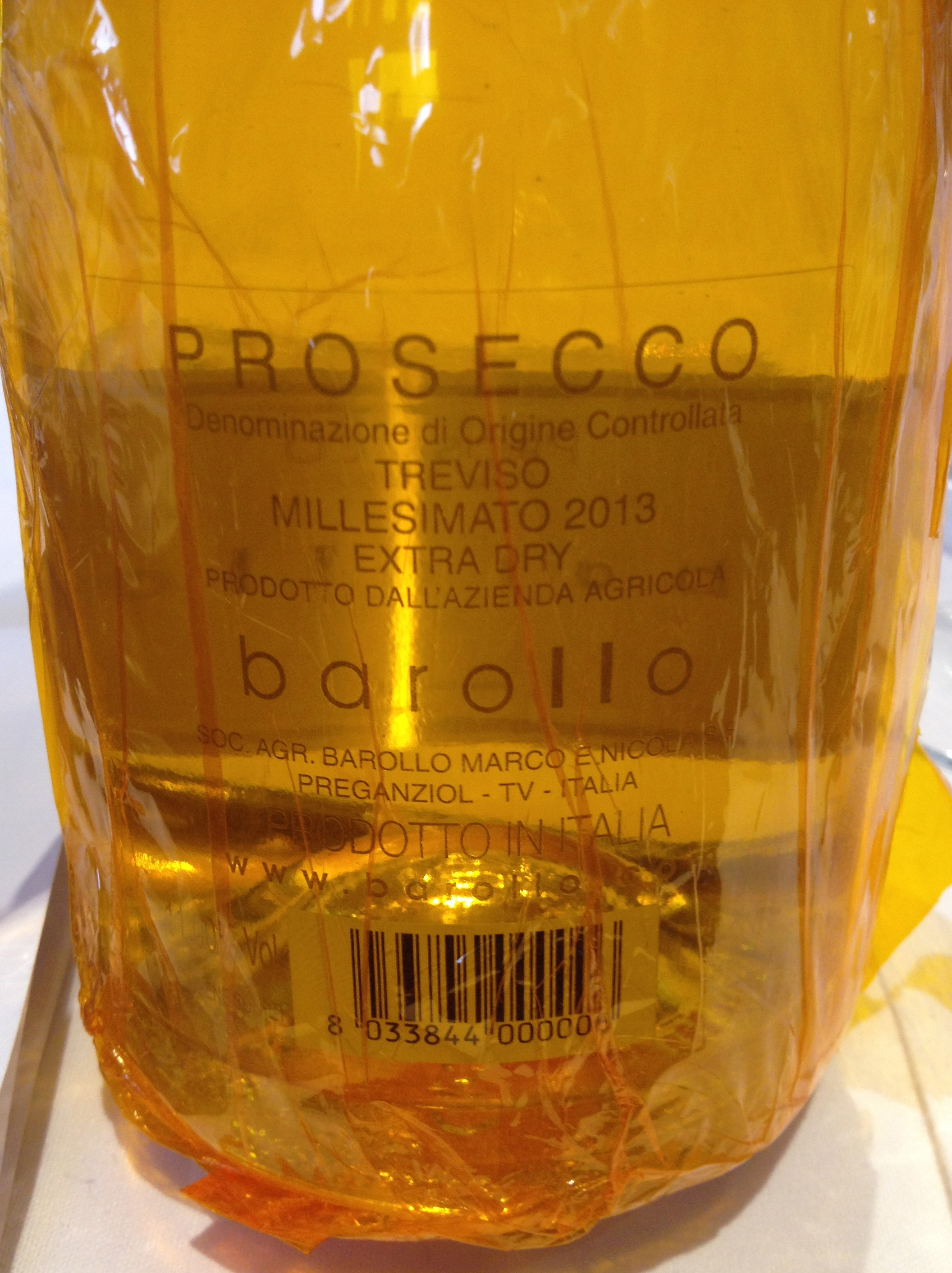
Prosecco DOC Treviso NV made from100% Gela from manually selected grapes. The soil is medium grained with limestone and clay. Training system is the syloz, this is a trellising system where the canes bend downward a few weeks before the harvest. There are about 2,700 vines per hectare. Harvest takes place the first week of September. The Charmat method consisting of a natural fermentation in bulb tanks takes place and lasts for 90 days. Aging is for another 3 to 4 months. The wine has a light golden yellow color with hints of acacia flowers and fresh aromatic notes of yellow apple and peach. It has a nice fruity aftertaste. The Prosecco was served with a mini pastry platter consisting mostly of little bites of chocolate. It was unusual to serve the prosecco last but it made a very refreshing end to the meal and went very well with the chocolate.

This was an enjoyable tasting with wine and food pairings that were well thought out. I am looking forward to the next event.

Leave a comment

Filed under Cabernet Frank, Italian Red Wine, Italian Sparkling Wine, Italian White Wine, Italian Wine, Manzoni, Marco and Nicola Barollo winery, Merlot, Prosecco, Sauvignon Blanc